Chapter 13 · Additional Maths · Derivatives of trig, exponential and log functions
Differentiating sin x, cos x, tan x, eˣ and ln x
Chapter 11 gave you the rules; this chapter gives you five new standard results and shows that the same rules work on them. The derivatives of sin x, cos x, tan x, e^x and ln x are the building blocks. With the chain, product and quotient rules they unlock almost any function an exam can write, and with the gradient they find tangents, normals, stationary points and rates of change for waves, growth and decay. Angles are in radians throughout.
Your outcome tracker0 / 7
Let's go! Tick an outcome once you can pass its exam check. Saved on this device.
Chapter 13
Figure 1 · the curve y = sin x and its tangent at x = π/6: the gradient there is cos(π/6) = √3/2, so the derivative of sin x is cos x (x in radians)
r = 1y = sin θcos θ
1 outcomes · 1 page · every step shown ✦
The five results
sin x → cos x, cos x → −sin x, tan x → sec² x, e^x → e^x, ln x → 1/x. Radians only: with x in degrees the trig results are wrong.
Composite arguments
Keep the whole argument in the outside derivative, then multiply by the derivative of the argument: d/dx sin(ax + b) = a cos(ax + b), d/dx e^(ax + b) = a e^(ax + b), d/dx ln(ax + b) = a/(ax + b).
Split logs first
ln of a product, quotient or power: use the log laws before differentiating. ln(a + b) never splits. Then use the tangent, stationary-point and rate methods of chapter 12 on the new functions.
By the end of this chapter
Recall and use d/dx of sin x, cos x, tan x, e^x and ln x, with constant multiples, sums and differences (x in radians).
Differentiate sin(ax + b), cos(ax + b), tan(ax + b), e^(ax + b) and ln(ax + b), and more general composite functions, with the chain rule.
Use the product and quotient rules with these functions and factorise the answer.
Use the laws of logarithms to split ln of a product, quotient, power or root before differentiating.
Find gradients, tangents and normals, stationary points and their nature, connected rates and show-that results for these functions.
Know that the standard results for sin, cos and tan need radians, and give exact answers using exact trigonometric values and exact logarithms.
✶
Start here
Maths In Real Life
Three situations where a wave, a cooling curve or a logarithmic fill rate decides what is measured. The pictures come first; the working in each solution comes from the same numbers.
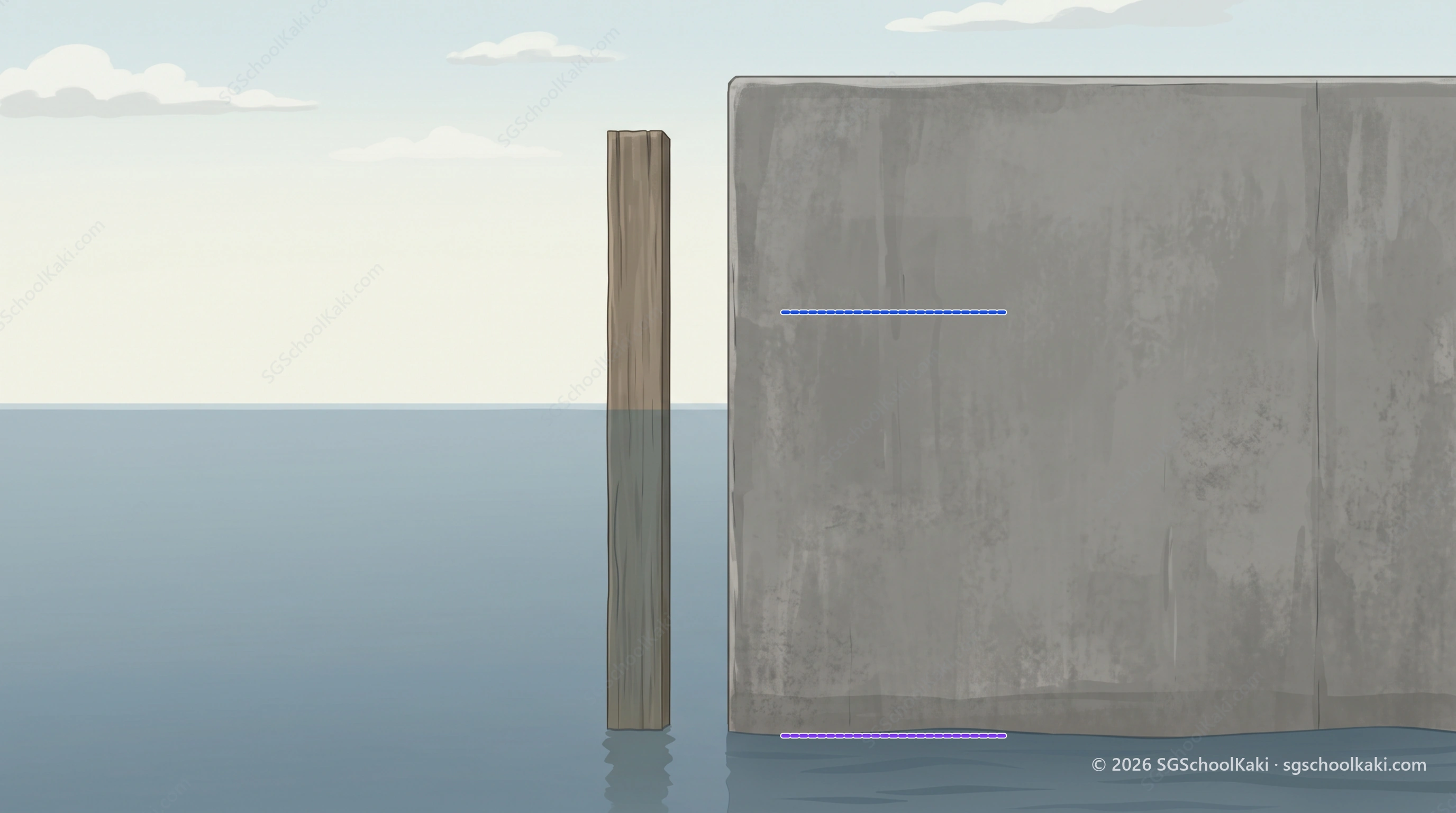
high water 5 mlow water 1 mside view
Maths In Real Life 1
The tide at a sea wall
Tides rise and fall in a smooth wave. Port engineers use the highest and lowest water levels to set the height of a sea wall, and the rate of rise tells them how quickly the water reaches a given mark.
The height of the water at a sea wall is y metres above the low-tide datum, where y=2sin(6πx)+3, and x is the time in hours after midnight, for 0≤x≤12. The angle is in radians.
(a)Find the times at which the water is highest and lowest, the height of the water at each of those times, and say which is which.
(b)Find how fast the water is rising at midnight, when x=0.
Show full solutionHide solution
Colour keyderivative of a part or intermediate resultfinal result
(a)
dxd(3)=0
The derivative of a constant is 0.
dxd(2sin(6πx))=2cos(6πx)×6π=3πcos(6πx)
Chain rule: the derivative of sin(6πx) keeps the whole argument, giving cos(6πx), then multiply by the derivative of the argument, 6π. The constant multiplier stays in front.
dxdy=3πcos(6πx)
Add the derivatives of the terms.
At a stationary point the gradient is 0, so set the derivative equal to 0 for 0<x<12.
3πcos(6πx)=0
A stationary point is where the gradient is zero.
x=3 or x=9
Solve for x in radians, keeping only the values inside the interval.
y=2×sin(6π×(3))+3=5
Put x=3 into the curve.
y=2×sin(6π×(9))+3=1
Put x=9 into the curve.
Differentiate the first derivative once more.
dx2d2y=(−3πsin(6πx))×6π
Chain rule: the derivative of cos(6πx) keeps the whole argument, giving −sin(6πx), then multiply by the derivative of the argument, 6π. The constant multiplier stays in front.
=−18π2sin(6πx)
Combine the factors into one term.
y′′=−18π2×sin(6π×(3))=−18π2
Put x=3 into the second derivative. Use the exact trigonometric values; the angle is in radians.
The second derivative is negative, so the point is a maximum.
f′′=−18π2×sin(6π×(9))=18π2
Put x=9 into the second derivative. Use the exact trigonometric values; the angle is in radians.
The second derivative is positive, so the point is a minimum.
(b)
dxd(3)=0
The derivative of a constant is 0.
dxd(2sin(6πx))=2cos(6πx)×6π=3πcos(6πx)
Chain rule: the derivative of sin(6πx) keeps the whole argument, giving cos(6πx), then multiply by the derivative of the argument, 6π. The constant multiplier stays in front.
dxdy=3πcos(6πx)
Add the derivatives of the terms.
dxdy=3π×cos(6π×(0))=3π
Put x=0 into the derivative, then use the exact values of the trigonometric functions at this angle (the angle is in radians).
Answer
(a)x=3 hours after midnight, y=5 m; x=9 hours after midnight, y=1 m; high water: y=5 m at x=3 hours after midnight; low water: y=1 m at x=9 hours after midnight
(b) Rate (metres per hour): dxdy=3π when x=0
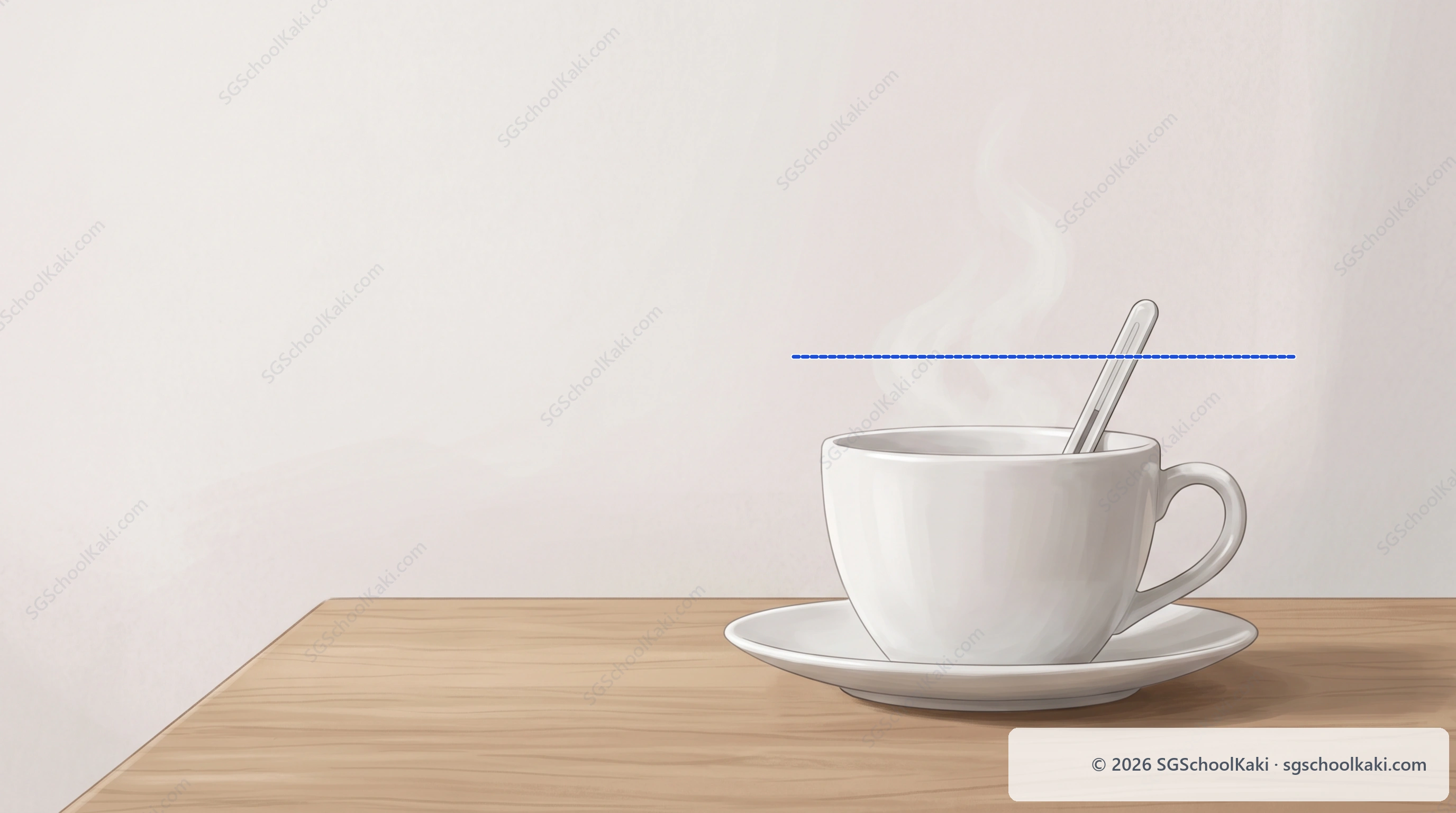
start 80 °Cfront view
Maths In Real Life 2
A cup of tea cooling
A hot drink loses heat fastest at the start and more slowly as it nears room temperature. The gradient of the cooling curve measures how fast, and its sign tells you whether the cooling is speeding up or slowing down.
A cup of tea is poured at time x=0. Its temperature is y °C at x minutes after pouring, where y=24+56e−20x.
(a)Find the rate at which the temperature is changing at the instant the tea is poured, when x=0.
(b)Find dx2d2y and its value when x=0, and say whether the cooling is speeding up or slowing down.
Show full solutionHide solution
Colour keyderivative of a part or intermediate resultfinal result
(a)
dxd(24)=0
The derivative of a constant is 0.
dxd(56e−20x)=56e−20x×(−201)=−514e−20x
Chain rule: the derivative of e−20x keeps the whole argument, giving e−20x, then multiply by the derivative of the argument, −201. The constant multiplier stays in front.
dxdy=−514e−20x
Add the derivatives of the terms.
dxdy=−514×e−20(0)=−514
Put x=0 into the derivative, then work out the exact value.
(b)
dxd(24)=0
The derivative of a constant is 0.
dxd(56e−20x)=56e−20x×(−201)=−514e−20x
Chain rule: the derivative of e−20x keeps the whole argument, giving e−20x, then multiply by the derivative of the argument, −201. The constant multiplier stays in front.
dxdy=−514e−20x
Add the derivatives of the terms.
Differentiate the first derivative once more.
dx2d2y=(−514e−20x)×(−201)
Chain rule: the derivative of e−20x keeps the whole argument, giving e−20x, then multiply by the derivative of the argument, −201. The constant multiplier stays in front.
=507e−20x
Combine the factors into one term.
dx2d2y=507×e−20(0)
Put x=0 into the second derivative.
=507
Work out the exact value.
The value is positive, so the gradient is increasing as x increases through that point. In words: the gradient is negative but increasing towards 0, so the temperature falls more and more slowly: the cooling is slowing down.
Answer
(a) Rate (°C per minute): dxdy=−514 when x=0
(b)dx2d2y=507e−20x; Second derivative (°C per minute squared): dx2d2y=507, so the gradient is negative but increasing towards 0, so the temperature falls more and more slowly: the cooling is slowing down
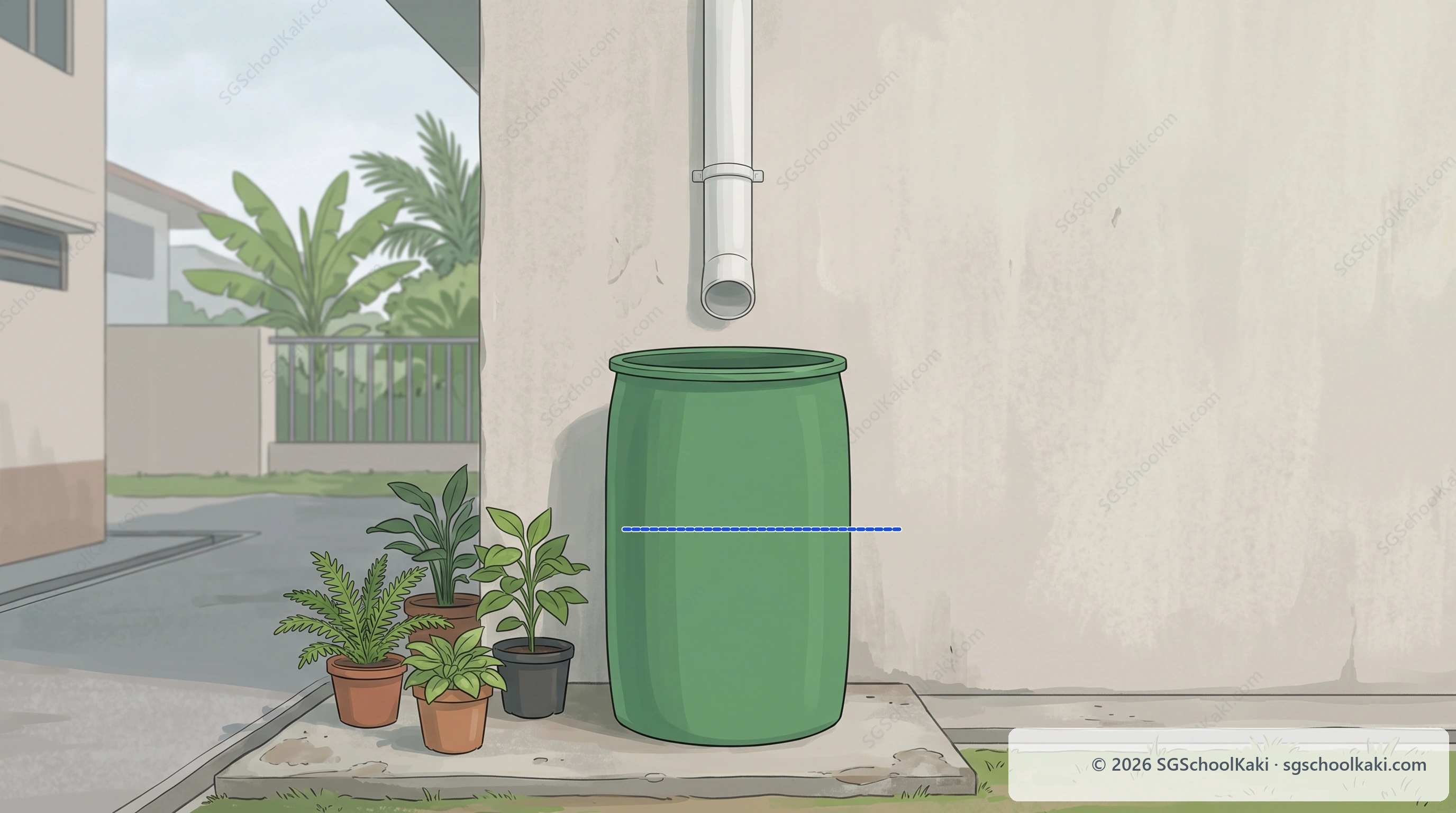
depth after 3 hfront view
Maths In Real Life 3
Rainwater in a barrel
When rain starts, a barrel fills quickly at first and then more slowly as the water gets deeper. A logarithm models this, and its gradient and second derivative describe the filling.
Rainwater collects in a barrel. The depth of water is y cm at x hours after the rain starts, where y=40ln(x+1), for 0≤x≤5.
(a)Find how fast the depth is rising when x=3.
(b)Find dx2d2y and its value when x=3, and explain why the depth rises more and more slowly.
Show full solutionHide solution
Colour keyfinal result
(a)
dxdy=40×x+11
The derivative of lnf(x) is f′(x) over f(x): the derivative of the argument, 1, over the argument, x+1. The constant multiplier stays in front.
=x+140
Combine the factors into one term.
dxdy=(3)+140=10
Put x=3 into the derivative, then work out the exact value.
(b)
dxdy=40×x+11
The derivative of lnf(x) is f′(x) over f(x): the derivative of the argument, 1, over the argument, x+1. The constant multiplier stays in front.
=x+140
Combine the factors into one term.
Differentiate the first derivative once more.
dx2d2y=−40(x+1)21×1
Chain rule: bring the power −1 down, lower it by 1 keeping the bracket, then multiply by the derivative of the bracket, 1.
=−(x+1)240
Combine the factors into one term.
dx2d2y=−((3)+1)240
Put x=3 into the second derivative.
=−25
Work out the exact value.
The value is negative, so the gradient is decreasing as x increases through that point. In words: the rate at which the depth rises is decreasing: the depth rises more and more slowly.
Answer
(a) Rate (cm per hour): dxdy=10 when x=3
(b)dx2d2y=−(x+1)240; Second derivative (cm per hour squared): dx2d2y=−25, so the rate at which the depth rises is decreasing: the depth rises more and more slowly
01
Supports K341-C1-04
Derivatives of sin x, cos x and tan x
Chapter 11 gave you the rules. This chapter adds five new standard results to the list of functions you can differentiate: sinx, cosx, tanx, ex and lnx. Start with the three trigonometric ones. Each result below needs x in radians, the unit used for every calculus statement in this chapter.
The Core Idea
The three trigonometric results.
dxd(sinx)=cosxdxd(cosx)=−sinxdxd(tanx)=sec2x Memorise all three, including the minus sign in the result for cosx. The derivative of tanx is written with sec2x, which means cos2x1.
The picture shows why the results look the way they do. On the curve y=sinx the gradient at a point is the value of cosx there; on y=cosx the gradient is −sinx, so the cosine curve falls where the sine is positive. The three tangents below are drawn on one window, so you can compare how steep each curve is at its marked point.
Sine, cosine and tangent with the gradient at one point
Function
Derivative
What the gradient does
Picture
y=sinx
cosx
The gradient is positive where cosx>0 (the curve rises) and negative where cosx<0.
tangent at x=6π
y=cosx
−sinx
The gradient is negative where sinx>0: the cosine curve falls just after its highest point.
tangent at x=3π
y=tanx
sec2x
The gradient is never negative, because sec2x is a square: the tangent curve only rises.
tangent at x=4π
Constant multiples and sums work as before: the derivative of a sum is the sum of the derivatives, and a constant multiplier stays in front. Terms in xn use the power rule of Chapter 11.
Example 1.1
The standard results in a sum
Differentiate y=x3+5sin(x)−2cos(x) with respect to x.
Show solutionHide solution
Colour keyderivative of a part or intermediate resultfinal result
dxd(x3)=3x2
Multiply by the power 3 and lower the power by 1.
dxd(−2cos(x))=2sin(x)
The derivative of cos(x) is −sin(x) (for x in radians). The constant multiplier stays in front.
dxd(5sin(x))=5cos(x)
The derivative of sin(x) is cos(x) (for x in radians). The constant multiplier stays in front.
dxdy=3x2+2sin(x)+5cos(x)
Add the derivatives of the terms.
Answer
dxdy=3x2+2sin(x)+5cos(x)
The derivative of cosx is −sinx, with a minus sign. A term such as −2cosx therefore has derivative −2×(−sinx), which is +2sinx: two negatives make a positive. Keep every sign visible on its own line.
Example 1.2
tan x gives sec squared
Differentiate y=3x+tan(x) with respect to x.
Show solutionHide solution
Colour keyderivative of a part or intermediate resultfinal result
dxd(3x)=3
The term is a multiple of x, so its derivative is that multiple.
dxd(tan(x))=sec2(x)
The derivative of tan(x) is sec2(x) (for x in radians).
dxdy=sec2(x)+3
Add the derivatives of the terms.
Answer
dxdy=sec2(x)+3
When the angle is not just x, the angle's own rate of change multiplies the result. This is the chain rule of Chapter 11: keep the whole angle inside the outside derivative, then multiply by the derivative of the angle.
The Core Idea
Linear angles.
dxdsin(ax+b)=acos(ax+b)dxdcos(ax+b)=−asin(ax+b)dxdtan(ax+b)=asec2(ax+b) The multiplier a comes out in front, and the constant b disappears. Keep the minus sign for cosine.
Example 1.3
Linear angles with a constant
Differentiate y=3sin(2x+1)−cos(4x−3) with respect to x.
Show solutionHide solution
Colour keyderivative of a part or intermediate resultfinal result
dxd(−cos(4x−3))=sin(4x−3)×4=4sin(4x−3)
Chain rule: the derivative of cos(4x−3) keeps the whole argument, giving −sin(4x−3), then multiply by the derivative of the argument, 4. The constant multiplier stays in front.
dxd(3sin(2x+1))=3cos(2x+1)×2=6cos(2x+1)
Chain rule: the derivative of sin(2x+1) keeps the whole argument, giving cos(2x+1), then multiply by the derivative of the argument, 2. The constant multiplier stays in front.
dxdy=4sin(4x−3)+6cos(2x+1)
Add the derivatives of the terms.
Answer
dxdy=4sin(4x−3)+6cos(2x+1)
SGSchoolKaki Tip
Do not forget the multiplier. dxdsin(2x) is 2cos(2x), not cos(2x): the angle changes twice as fast as x, so the whole curve is twice as steep at the same stage of its cycle.
Example 1.4
A fractional multiplier
Differentiate y=sin(2x)+2tan(3x) with respect to x.
Show solutionHide solution
Colour keyderivative of a part or intermediate resultfinal result
dxd(2tan(3x))=2sec2(3x)×3=6sec2(3x)
Chain rule: the derivative of tan(3x) keeps the whole argument, giving sec2(3x), then multiply by the derivative of the argument, 3. The constant multiplier stays in front.
dxd(sin(2x))=cos(2x)×21=2cos(2x)
Chain rule: the derivative of sin(2x) keeps the whole argument, giving cos(2x), then multiply by the derivative of the argument, 21.
dxdy=2cos(2x)+6sec2(3x)
Add the derivatives of the terms.
Answer
dxdy=2cos(2x)+6sec2(3x)
Think About It
A student says: “The gradient of y=sinx at the origin is 1, so the gradient of y=sin(3x) at the origin is also 1.” Is the student right?
Show the full workingHide the working
dxdy=3cos(3x)
Chain rule: the derivative of sin(3x) has the multiplier 3 from the angle.
m=3cos0=3×1=3
The gradient m at the origin: put x=0 into the derivative and use cos0=1.
Answer
The student is wrong: the gradient at the origin is 3, not 1. The multiplier 3 from the angle makes the curve 3 times as steep there, because the angle changes 3 times as fast as x.
Once you have a derivative, a gradient at a given point is one substitution away. Because the angle is in radians, the angle 6π is allowed and its sine and cosine are exact: put the angle in, use the exact trigonometric values you know, and leave the answer as a fraction or a surd. A calculator set to degrees would give the wrong gradient: set it to radians, or better, use exact values.
Example 1.5
The gradient at an angle in radians
Given that f(x)=3sin(2x)+cos(x), find f′(x) and the gradient of the curve y=f(x) at the point where x=6π.
Show solutionHide solution
Colour keyderivative of a part or intermediate resultfinal result
dxd(3sin(2x))=3cos(2x)×2=6cos(2x)
Chain rule: the derivative of sin(2x) keeps the whole argument, giving cos(2x), then multiply by the derivative of the argument, 2. The constant multiplier stays in front.
dxd(cos(x))=−sin(x)
The derivative of cos(x) is −sin(x) (for x in radians).
f′(x)=−sin(x)+6cos(2x)
Add the derivatives of the terms.
m=−sin(6π)+6×cos(2×(6π))
Put x=6π into the derivative.
=25
Use the exact values of the trigonometric functions at this angle; the angle is in radians.
Two more standard results complete the toolbox. The exponential function ex has the remarkable property that its gradient at any point equals its height there, and the natural logarithm lnx has a gradient that gets smaller as x grows. With a linear argument such as e3x+1 or ln(2x+3), the chain rule brings the coefficient of x into the answer.
The Core Idea
e^x is its own derivative; ln x gives 1/x; a linear argument brings its coefficient of x into the answer.
dxd(ex)=ex and dxd(lnx)=x1 (for x>0). With a linear argument: dxd(eax+b)=aeax+b and dxdln(ax+b)=ax+ba. Keep the whole argument inside the exponential or the logarithm, then put the derivative of the argument in front (exponential) or on top (logarithm).
Revision. From Chapter 6 and Chapter 11. ex and lnx are inverse functions, so elnx=x and lnex=x; also e0=1 and ln1=0. The chain rule differentiates a function of a function, and a constant multiplier stays in front.
Example 2.1
The two basic results with a power of x
Find dxdy for y given by x2+4ex−3ln(x), where x>0.
Show solutionHide solution
Colour keyderivative of a part or intermediate resultfinal result
dxd(x2)=2x
Multiply by the power 2 and lower the power by 1.
dxd(−3ln(x))=−x3
The derivative of ln(x) is x1. The constant multiplier stays in front.
dxd(4ex)=4ex
The derivative of ex is ex. The constant multiplier stays in front.
dxdy=2x+4ex−x3
Add the derivatives of the terms.
Answer
dxdy=2x+4ex−x3
SGSchoolKaki Tip
The derivative of ex is ex, with nothing added and nothing removed. A constant multiple stays: dxd(4ex)=4ex. And lnx is the function whose derivative is x−1: dxd(lnx)=x1. The power rule never produces x−1, because it would need x0, whose derivative is 0.
Example 2.2
An exponential with a negative coefficient of x
Differentiate y=2e3x+1−e−x with respect to x.
Show solutionHide solution
Colour keyderivative of a part or intermediate resultfinal result
dxd(−e−x)=(−e−x)×(−1)=e−x
Chain rule: the derivative of e−x keeps the whole argument, giving e−x, then multiply by the derivative of the argument, −1. The constant multiplier stays in front.
dxd(2e3x+1)=2e3x+1×3=6e3x+1
Chain rule: the derivative of e3x+1 keeps the whole argument, giving e3x+1, then multiply by the derivative of the argument, 3. The constant multiplier stays in front.
dxdy=6e3x+1+e−x
Add the derivatives of the terms.
Answer
dxdy=6e3x+1+e−x
Do not lose the coefficient of x, and keep its sign. dxd(e−x)=−e−x, never e−x, and dxdln(2x+3)=2x+32, never 2x+31. The derivative of the argument always comes along.
Example 2.3
ln(ax + b): the coefficient goes on top
Given that y=5ln(x)+ln(2x+3) for x>0, find dxdy.
Show solutionHide solution
Colour keyderivative of a part or intermediate resultfinal result
dxd(5ln(x))=x5
The derivative of ln(x) is x1. The constant multiplier stays in front.
dxd(ln(2x+3))=2x+32
The derivative of lnf(x) is f′(x) over f(x): the derivative of the argument, 2, over the argument, 2x+3.
dxdy=2x+32+x5
Add the derivatives of the terms.
Answer
dxdy=2x+32+x5
Example 2.4
A fractional argument and a logarithm in one function
The curve has equation y=5e2x−2ln(3x+1), where x>−31. Find dxdy.
Show solutionHide solution
Colour keyderivative of a part or intermediate resultfinal result
dxd(−2ln(3x+1))=−2×3x+13=−3x+16
The derivative of lnf(x) is f′(x) over f(x): the derivative of the argument, 3, over the argument, 3x+1. The constant multiplier stays in front.
dxd(5e2x)=5e2x×21=25e2x
Chain rule: the derivative of e2x keeps the whole argument, giving e2x, then multiply by the derivative of the argument, 21. The constant multiplier stays in front.
dxdy=25e2x−3x+16
Add the derivatives of the terms.
Answer
dxdy=25e2x−3x+16
e^x and ln x side by side: the tangent at one point of each curve
Function
Derivative
Picture
ex
ex: the gradient equals the height
tangent at x=0: height 1, gradient 1
e−x
−e−x: always negative, so the curve always falls
tangent at x=0: gradient −1
lnx (for x>0)
x1: positive, and smaller as x grows
tangent at x=1: gradient 1
Example 2.5
Gradient at x = 0 from exact values
The curve y=e2x−4ln(x+1) is defined at the point where x=0. Find dxdy, and hence the gradient of the curve at that point.
Show solutionHide solution
Colour keyderivative of a part or intermediate resultfinal result
dxd(−4ln(x+1))=−4×x+11=−x+14
The derivative of lnf(x) is f′(x) over f(x): the derivative of the argument, 1, over the argument, x+1. The constant multiplier stays in front.
dxd(e2x)=e2x×2=2e2x
Chain rule: the derivative of e2x keeps the whole argument, giving e2x, then multiply by the derivative of the argument, 2.
dxdy=2e2x−x+14
Add the derivatives of the terms.
m=2×e2×(0)−(0)+14
Put x=0 into the derivative.
=−2
Work out the exact value.
Answer
dxdy=2e2x−x+14; m=−2
SGSchoolKaki Tip
Use the exact values at x=0 and x=1. e0=1 and ln1=0, so the gradient at x=0 of a function with eax and ln(bx+1) comes out as a whole number or a fraction, with no calculator.
Think About It
A student says that the derivative of lng(x) is just g(x)1. Test this rule on y=ln(e3x), a function whose derivative you can find without any rule for logarithms.
Show the full workingHide the working
The logarithm and the exponential undo each other, so the function simplifies before any derivative is taken.
y=ln(e3x)=3x
ln and ex are inverse functions, so the function is just a straight line.
dxdy=3
A straight line y=3x has gradient 3 at every x.
e3x1=e−3x
With g(x)=e3x this is what the student's rule gives for every x.
e−3x=e−3×0=1
At x=0 the student's rule gives 1, but the true gradient is 3.
g(x)g′(x)=e3x3e3x=3
With the derivative of the argument, 3e3x, on top, the gradient is 3 for every x, as it should be.
Answer
The student's rule gives e−3x, which is 1 at x=0, but the straight line y=3x has gradient 3. The rule g(x)g′(x) gives 3 exactly. So the derivative of the argument must be on top: dxdlng(x)=g(x)g′(x), not g(x)1.
Beyond the Syllabus · Good to Know
Powers with another base. For a constant a>0, ax=exlna, so by the chain rule dxd(ax)=axlna. For example dxd(2x)=2xln2. This is good to know but it is not required: if ax ever appears, write it as exlna first.
Chain rule with trig, exponential and log functions
A composite function is a function inside another function, such as ex2 (an exponential of a quadratic) or sin3x (a cube of a sine). The chain rule of Chapter 11 differentiates them: differentiate the outside, keep the inside unchanged, then multiply by the derivative of the inside.
The Core Idea
The chain rule with the five new functions.
dxdf(g(x))=f′(g(x))×g′(x). The outside derivative keeps the whole inside: dxdeg(x)=g′(x)eg(x), dxdlng(x)=g(x)g′(x), dxdsing(x)=g′(x)cosg(x), and for a power, dxd(g(x))n=n(g(x))n−1g′(x).
Which rule and what answer shape
The function looks like
Outside function
Inside function
What the answer looks like
eg(x)
e□ keeps its inside
g(x)
g′(x)eg(x): the exponential is unchanged and is multiplied by g′(x).
lng(x)
ln□ becomes □1
g(x)
g(x)g′(x): a fraction with the inside underneath.
sing(x) or cosg(x) or tang(x)
the trig function changes as in the table above, keeping the inside
g(x)
g′(x)cosg(x), −g′(x)sing(x) or g′(x)sec2g(x).
(sinx)n, (ex+2)n, (lnx+1)n
the power: bring n down and lower the power by 1
the bracket
n(bracket)n−1 times the derivative of the bracket.
Example 3.1
e to the power of a quadratic
Differentiate y=ex2−3x with respect to x.
Show solutionHide solution
Colour keyfinal result
dxdy=ex2−3x×(2x−3)
Chain rule: the derivative of ex2−3x keeps the whole argument, giving ex2−3x, then multiply by the derivative of the argument, 2x−3.
=(2x−3)ex2−3x
Combine the factors into one term.
Answer
dxdy=(2x−3)ex2−3x
SGSchoolKaki Tip
The exponential factor never changes in the answer: ex2−3x appears again after differentiating. The only new piece is the derivative of the power, 2x−3, written in front.
Example 3.2
ln of a cubic
Differentiate y=ln(x3+5) with respect to x.
Show solutionHide solution
Colour keyfinal result
dxdy=x3+53x2
The derivative of lnf(x) is f′(x) over f(x): the derivative of the argument, 3x2, over the argument, x3+5.
Answer
dxdy=x3+53x2
The derivative of ln(g(x)) is g(x)g′(x), not g(x)1. Writing only g(x)1 forgets the chain-rule factor. The same factor a appears for ln(ax+b), whose derivative is ax+ba.
Example 3.3
A power of a trigonometric function
Differentiate y=sin3(x) with respect to x.
Show solutionHide solution
Colour keyfinal result
dxdy=3sin2(x)×cos(x)
Chain rule: bring the power 3 down, lower it by 1 keeping the bracket, then multiply by the derivative of the bracket, cos(x).
=3sin2(x)cos(x)
Combine the factors into one term.
Answer
dxdy=3sin2(x)cos(x)
sin3x means (sinx)3, so the derivative is 3(sinx)2cosx, which is NOT 3cos2x. The power comes down, the bracket stays as it is, and the derivative of the sine multiplies at the end. Also, sinx2 means the sine of x2, a different function: a stem always shows the brackets.
Example 3.4
A power of an exponential or logarithmic bracket
Differentiate y=(ex+2)3 with respect to x.
Show solutionHide solution
Colour keyfinal result
dxdy=3(ex+2)2×ex
Chain rule: bring the power 3 down, lower it by 1 keeping the bracket, then multiply by the derivative of the bracket, ex.
=3(ex+2)2ex
Combine the factors into one term.
Answer
dxdy=3(ex+2)2ex
Example 3.5
A trigonometric function of a quadratic
Differentiate y=2sin(3x2−1) with respect to x.
Show solutionHide solution
Colour keyfinal result
dxdy=2cos(3x2−1)×6x
Chain rule: the derivative of sin(3x2−1) keeps the whole argument, giving cos(3x2−1), then multiply by the derivative of the argument, 6x. The constant multiplier stays in front.
=12xcos(3x2−1)
Combine the factors into one term.
Answer
dxdy=12xcos(3x2−1)
Think About It
Are y=sin3(x) and y=sin(x3) the same function? Differentiate both to compare, and use x=2π as a test.
Show the full workingHide the working
dxd(sin3(x))=3sin2(x)cos(x)
Power of a bracket: bring the power down, keep the bracket, multiply by the derivative of the sine.
dxd(sin(x3))=3x2cos(x3)
Sine of a power: keep the whole angle, multiply by the derivative of the angle.
3sin2(2π)cos(2π)=3×0=0
At x=2π the sine is 1 and the cosine is 0, so the derivative of the first function is 0.
3(2π)2cos((2π)3)≈−5.50
The derivative of the second function at x=2π: put the angle in radians, so the angle inside the cosine is (2π)3. The value is -5.50 to 3 significant figures, which is not 0.
Answer
No. The derivatives are different expressions, and at x=2π the derivative of the first function is 0 while the derivative of the second function is about −5.50 (to 3 significant figures), which is not 0. So the two functions are different: a power of a sine and a sine of a power are not the same thing.
A function can be nested more than once. cos(ex) is a cosine whose angle is an exponential, so the outside derivative is −sin(ex) with the inside kept, and the inside, ex, has its own derivative ex to multiply.
Example 3.6
A function inside a function
Differentiate y=cos(ex) with respect to x.
Show solutionHide solution
Colour keyfinal result
dxdy=(−sin(ex))×ex
Chain rule: the derivative of cos(ex) keeps the whole argument, giving −sin(ex), then multiply by the derivative of the argument, ex.