Polynomials, cubic identities and partial fractions
A polynomial is the kind of expression you can add, multiply and divide without leaving the family. By the end of this chapter you can divide one polynomial by another, find remainders and factors without dividing, factorise and solve cubic equations, and split an algebraic fraction into simpler pieces.
Your outcome tracker0 / 8
Let's go! Tick an outcome once you can pass its exam check. Saved on this device.
Chapter 4
Figure 1 · long division at a glance
r = 1y = sin θcos θ
4 outcomes · 1 page · every step shown ✦
Divide, then check
Dividend = divisor × quotient + remainder, and the remainder's degree is smaller than the divisor's. Write a zero placeholder for every missing power.
Remainder and factor
Dividing by (x−a) leaves f(a). A remainder of 0 means (x−a) is a factor. For (ax+b) use f(−ab).
Split the fraction
Factorise the denominator, pick the form, then find the constants by substituting roots or comparing coefficients. Equal degrees mean divide first.
By the end of this chapter
Decide whether an expression is a polynomial, state its degree, evaluate f(a) and multiply polynomials.
Divide a polynomial by a linear or quadratic divisor using long division, with zero placeholders for missing powers, and write the division statement.
Use the remainder theorem and the factor theorem, including non-monic divisors, unknown constants and a quadratic divisor.
Factorise and solve cubic equations (trial root, division, quadratic formula, sum and difference of cubes) and answer the 'hence' questions that follow.
Split a proper or improper fraction into partial fractions for the three syllabus denominator forms, and check the result by substitution.
✶
Start here
Maths In Real Life
Two situations where a cubic polynomial appears. The pictures come first; the maths drawn over them is generated from the same numbers that the solutions use.
28 cm20 cmx cm
Maths In Real Life 1
The HDB herb tray
A resident along an HDB corridor makes a herb tray from a flat aluminium sheet: a square is cut from each corner and the sides are folded up. The size of the squares decides the volume of soil, and the volume is a cubic in that size: the same volume can often be reached with two different cuts.
A resident of an HDB block makes an open herb tray from a rectangular aluminium sheet 28 cm long and 20 cm wide. Squares of side x cm are cut from each corner and the sides are folded up. Let V be the volume of the tray in cm3.
(a)Show that V=4x3−96x2+560x.
(b)The tray must hold exactly 768 cm3. Find the possible values of x.
(c)Find V when x=3, and say whether the tray then holds more than 768 cm3.
Show full solutionHide solution
Colour keyterm subtracted or zero placeholderfactor or divisorvalue substitutedfinal result
(a)
Cutting a square of side x from every corner and folding the sides up gives a tray of height x. The base loses x at both ends of each side, so the length is 28−2x and the width is 20−2x.
Draw the sheet: each side of the base is shorter by two cuts.
V=x(28−2x)(20−2x)
Volume of a cuboid: length times width times height.
Vx(−2x+28)=−2x2+28x
Multiply the single term into every term of the bracket.
Now multiply by the next bracket, (−2x+20).
V(−2x2+28x)(−2x+20)=−2x2(−2x+20)+28x(−2x+20)
Multiply every term of the first bracket by the whole second bracket.
V=(4x3−40x2)+(−56x2+560x)
Expand each product, keeping its sign.
V=4x3−96x2+560x
Collect the terms that have the same power of x.
(b)
Bring every term to one side so that the other side is 0, then call the result f(x).
Subtract 768 from both sides: the equation becomes 4x3−96x2+560x−768=0.
So the equation is f(x)=4x3−96x2+560x−768=0.
Possible rational roots are a factor of 768 divided by a factor of 4. Try them in turn: f(1)=−300, f(−1)=−1428, and neither is 0.
f(2)=4(2)3−96(2)2+560(2)−768
Replace every x by 2 and keep the brackets so signs cannot slip.
f(2)=32−384+1120−768
Powers first, then the multiplications.
f(2)=0
Now add and subtract.
f(2)=0, so (x−2) divides f(x) exactly: it is a factor (factor theorem).
Zero remainder means the bracket divides f(x) exactly.
Step 1: divide the leading terms, 4x3÷x=4x2. Write 4x2 in the quotient.
Only the two leading terms decide the next quotient term.
f(2)(4x3−96x2+560x−768)−(4x3−8x2)=−88x2+560x−768
Subtract 4x2 times the divisor, and change every sign of the product as you subtract.
Step 2: divide the leading terms, −88x2÷x=−88x. Write −88x in the quotient.
Only the two leading terms decide the next quotient term.
f(2)(−88x2+560x−768)−(−88x2+176x)=384x−768
Subtract −88x times the divisor, and change every sign of the product as you subtract.
Step 3: divide the leading terms, 384x÷x=384. Write 384 in the quotient.
Only the two leading terms decide the next quotient term.
f(2)(384x−768)−(384x−768)=0
Subtract 384 times the divisor, and change every sign of the product as you subtract.
The remainder 0 has lower degree than the divisor, so the division stops.
f(x)=(x−2)(4x2−88x+384)
Linear factor times quotient.
f(x)4x2−88x+384=4(x−6)(x−16)
Factorise the quadratic: find two numbers with the right sum and product.
Set each factor equal to 0 (a product is zero only when a factor is zero).
x−2=0⇒x=2
x−6=0⇒x=6
x−16=0⇒x=16
x=16 is rejected: it does not lie between 0 and 10 as the situation requires.
Always check each root against the story.
(c)
V(3)=4(3)3−96(3)2+560(3)
Replace every x by 3 and keep the brackets so signs cannot slip.
V(3)=108−864+1680
Powers first, then the multiplications.
V(3)=924
Now add and subtract.
Compare with the target: V(3)=924 is greater than 768, so a cut of 3 cm gives a tray with more than the required volume.
Answer
(a)4x3−96x2+560x
(b)x=2 cm,x=6 cm
(c)V(3)=924 cm3; 924>768, so the tray holds more than 768 cm3.
(x+2) dmℓw
Maths In Real Life 2
The shipping crate
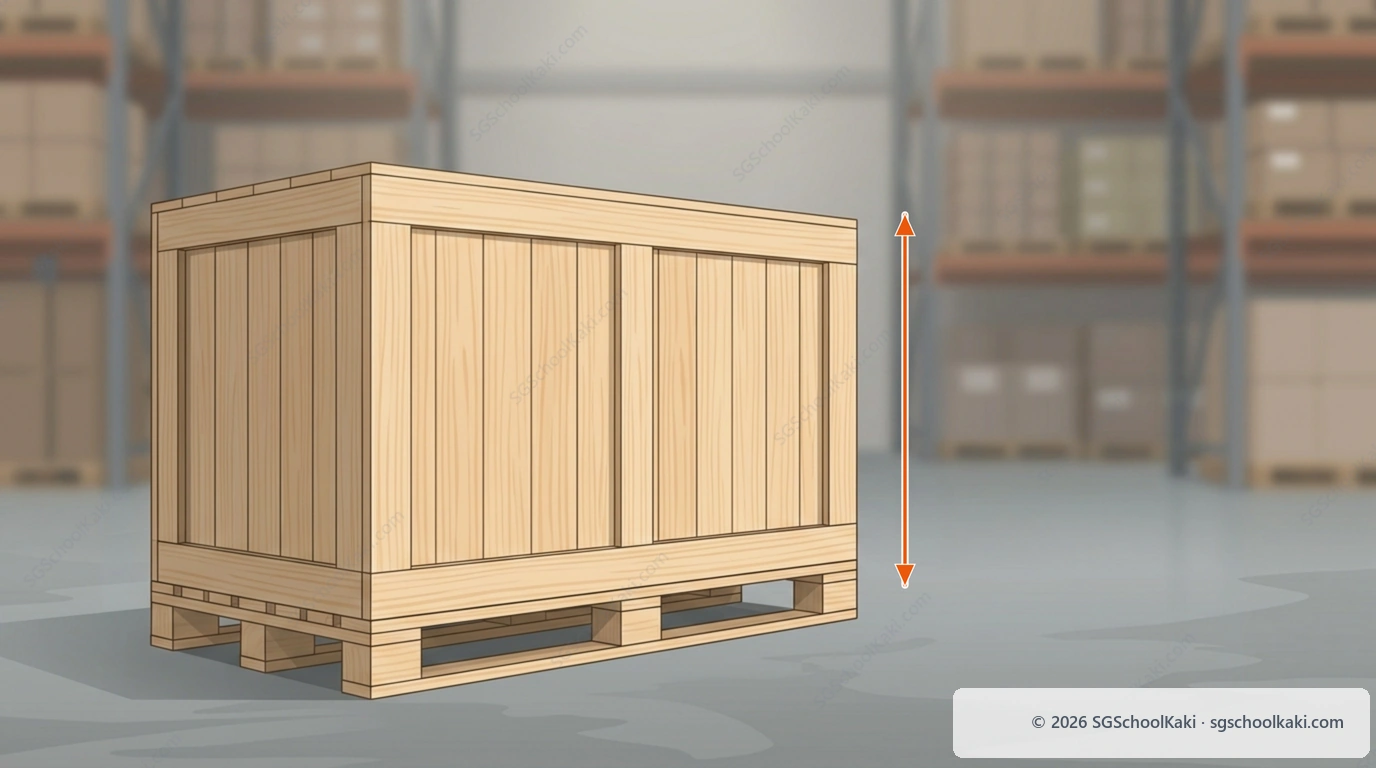
The space inside a crate is length times width times height. When each of these is written with the same unknown x, the volume is a cubic polynomial, and dividing it by one known dimension leaves the area of the base.
A wooden crate has height (x+2) dm, length ℓ dm and width w dm, where ℓ>w. Its volume is V=x3+10x2+31x+30 litres (one litre is one cubic decimetre), where x is a positive number of decimetres.
(a)Divide V by the height to find an expression for the area of the base.
(b)Hence factorise V completely and write down ℓ and w in terms of x.
(c)Find the volume of the crate when its height is 6 dm.
Show full solutionHide solution
Colour keyterm subtracted or zero placeholdervalue substitutedfinal result
(a)
Divide V by the height (x+2).
Step 1: divide the leading terms, x3÷x=x2. Write x2 in the quotient.
Only the two leading terms decide the next quotient term.
(x3+10x2+31x+30)−(x3+2x2)=8x2+31x+30
Subtract x2 times the divisor, and change every sign of the product as you subtract.
Step 2: divide the leading terms, 8x2÷x=8x. Write 8x in the quotient.
Only the two leading terms decide the next quotient term.
(8x2+31x+30)−(8x2+16x)=15x+30
Subtract 8x times the divisor, and change every sign of the product as you subtract.
Step 3: divide the leading terms, 15x÷x=15. Write 15 in the quotient.
Only the two leading terms decide the next quotient term.
(15x+30)−(15x+30)=0
Subtract 15 times the divisor, and change every sign of the product as you subtract.
The remainder 0 has lower degree than the divisor, so the division stops.
(b)
Write f(x) for the volume V in this part.
From the earlier part, f(x)=(x+2)(x2+8x+15), so only the quadratic factor still needs attention.
f(x)=(x+2)(x2+8x+15)
Linear factor times quotient.
f(x)x2+8x+15=(x+5)(x+3)
Factorise the quadratic: find two numbers with the right sum and product.
The height is x+2=6, so x=4. Put this value into V.
V(4)=(4)3+10(4)2+31(4)+30
Replace every x by 4 and keep the brackets so signs cannot slip.
V(4)=64+160+124+30
Powers first, then the multiplications.
V(4)=378
Now add and subtract.
Answer
(a) quotient x2+8x+15; remainder 0; the area of the base is (x2+8x+15) dm2.
(b)f(x)=(x+5)(x+3)(x+2); ℓ=(x+5) dm and w=(x+3) dm (the longer side is ℓ).
(c)V(4)=378 litres
01
Supports K341-A4-01
What is a polynomial? Degree, f(a) and multiplying
A polynomial in x is a sum of terms, each a number times x raised to a whole-number power: 0, 1, 2, 3, .... So 4x3−2x+9 is a polynomial, but x1+2 (a power of −1), x (a power of 21) and 2x (the unknown sits in the exponent) are not. The degree is the highest power of x that appears. The number multiplying that power is the leading coefficient.
Case table 1: polynomial or not?
Expression
Polynomial?
Degree
Reason
x3−4x+9
Yes
3
Every power of x is a whole number, 0 or more.
x2+x1
No
none
x1 has x in a denominator (a negative power of x).
7
Yes
0
Every power of x is a whole number, 0 or more.
x+3
No
none
x has a fractional power of x (a root of x).
2x+x
No
none
x is in an exponent (2x).
−x4+5
Yes
4
Every power of x is a whole number, 0 or more.
The Core Idea
Only whole-number powers allowed; the degree is the biggest one.
A constant such as 7 is a polynomial of degree 0. The notation f(x) names the polynomial, and f(a) means 'put x=a into it'.
Example 1.1
Is it a polynomial?
Decide whether each expression is a polynomial in x. For each polynomial, state its degree.
(i)p(x)=3x4−2x+7
(ii)q(x)=x2+x1
(iii)r(x)=−x3+5
(iv)s(x)=x+1
Show solutionHide solution
(i)
Check every term: each must be a number times x to a whole-number power (0, 1, 2, ...). The powers of x present are 4,1,0, all whole numbers.
So it is a polynomial. Its degree is the highest power of x, which is 4.
The degree ignores the coefficients: only the highest power counts.
(ii)
Check every term: a polynomial allows only a number times x to a whole-number power (0, 1, 2, ...).
The term x1 breaks the rule: x1 has x in a denominator (a negative power of x). So it is not a polynomial.
One bad term is enough to fail the test.
(iii)
Check every term: each must be a number times x to a whole-number power (0, 1, 2, ...). The powers of x present are 3,0, all whole numbers.
So it is a polynomial. Its degree is the highest power of x, which is 3.
The degree ignores the coefficients: only the highest power counts.
(iv)
Check every term: a polynomial allows only a number times x to a whole-number power (0, 1, 2, ...).
The term x breaks the rule: x has a fractional power of x (a root of x). So it is not a polynomial.
One bad term is enough to fail the test.
Answer
(i) a polynomial of degree 4
(ii) not a polynomial: x1 has x in a denominator (a negative power of x).
(iii) a polynomial of degree 3
(iv) not a polynomial: x has a fractional power of x (a root of x).
SGSchoolKaki Tip
To test a term, ask 'what power of x is this?'. Powers that are negative, fractional or contain x itself (2x) all fail.
Example 1.2
Evaluating f(a)
Let f(x)=2x3−5x2+3.
(i)Find f(2).
(ii)Find f(−1).
(iii)Find f(21).
Show solutionHide solution
Colour keyvalue substitutedfinal result
(i)
f(2)=2(2)3−5(2)2+3
Replace every x by 2 and keep the brackets so signs cannot slip.
f(2)=16−20+3
Powers first, then the multiplications.
f(2)=−1
Now add and subtract.
(ii)
f(−1)=2(−1)3−5(−1)2+3
Replace every x by −1 and keep the brackets so signs cannot slip.
f(−1)=−2−5+3
Powers first, then the multiplications.
f(−1)=−4
Now add and subtract.
(iii)
f(21)=2(21)3−5(21)2+3
Replace every x by 21 and keep the brackets so signs cannot slip.
f(21)=41−45+3
Powers first, then the multiplications.
f(21)=2
Now add and subtract.
Answer
(i)f(2)=−1
(ii)f(−1)=−4
(iii)f(21)=2
Example 1.3
Multiplying two polynomials
Expand (x+2)(x2−3x+5) and state the degree of the product.
Show solutionHide solution
Colour keyfinal result
(x+2)(x2−3x+5)=x(x2−3x+5)+2(x2−3x+5)
Multiply every term of the first bracket by the whole second bracket.
=(x3−3x2+5x)+(2x2−6x+10)
Expand each product, keeping its sign.
=x3−x2−x+10
Collect the terms that have the same power of x.
The degree of a product is the sum of the degrees: 1+2=3.
Only the leading terms multiply to give the highest power.
Answer
x3−x2−x+10; degree 3
Example 1.4
Three brackets
Expand (x+2)(x−1)(3x+1).
Show solutionHide solution
Colour keyfinal result
(x+2)(x−1)=x(x−1)+2(x−1)
Multiply every term of the first bracket by the whole second bracket.
=(x2−x)+(2x−2)
Expand each product, keeping its sign.
=x2+x−2
Collect the terms that have the same power of x.
Now multiply by the next bracket, (3x+1).
(x2+x−2)(3x+1)=x2(3x+1)+x(3x+1)−2(3x+1)
Multiply every term of the first bracket by the whole second bracket.
=(3x3+x2)+(3x2+x)+(−6x−2)
Expand each product, keeping its sign.
=3x3+4x2−5x−2
Collect the terms that have the same power of x.
Answer
3x3+4x2−5x−2
Think About It
Two polynomials have degrees 2 and 3. Why does their product always have degree exactly 5, and never lower?
Show the full workingHide the working
Only the two leading terms can multiply to give the highest power of x, so they are the only terms that matter for the degree.
Lower terms can never reach the top power.
(2x2)(−3x3)=−6x5
Multiply the coefficients and add the powers.
The new leading coefficient −6 is a product of two non-zero numbers, so it is never 0. The x5 term cannot vanish: degree =2+3=5.
Answer
The leading terms multiply to −6x5, which is never zero, so the degree of the product is the sum 2+3=5.
02
Supports K341-A4-01
Dividing polynomials: long division and the division statement
Dividing 17 by 5 gives quotient 3 and remainder 2, and you can write 17=5×3+2. Polynomials divide the same way. If you divide f(x) by g(x) you get a quotientq(x) and a remainderr(x), linked by the division statement.
The Core Idea
dividend = divisor × quotient + remainder
In symbols f(x)=g(x)q(x)+r(x), where the degree of r(x) is smaller than the degree of g(x). Divide by a linear divisor and the remainder is a plain number; divide by a quadratic and the remainder can be ax+b.
The layout: each power of x has its own column; subtract line by line.
Each round of long division does three things: divide the leading terms to get the next quotient term, multiply that term by the whole divisor, and subtract (changing every sign). Stop when what is left has a smaller degree than the divisor. If a power of x is missing, write it with a coefficient of 0 so the columns stay lined up.
Example 2.1
A linear divisor, remainder not zero
Divide f(x)=x3−4x2+2x+7 by (x−3). State the quotient and the remainder, and write the result as a division statement.
Show solutionHide solution
Colour keyterm subtracted or zero placeholder
Step 1: divide the leading terms, x3÷x=x2. Write x2 in the quotient.
Only the two leading terms decide the next quotient term.
(x3−4x2+2x+7)−(x3−3x2)=−x2+2x+7
Subtract x2 times the divisor, and change every sign of the product as you subtract.
Step 2: divide the leading terms, −x2÷x=−x. Write −x in the quotient.
Only the two leading terms decide the next quotient term.
(−x2+2x+7)−(−x2+3x)=−x+7
Subtract −x times the divisor, and change every sign of the product as you subtract.
Step 3: divide the leading terms, −x÷x=−1. Write −1 in the quotient.
Only the two leading terms decide the next quotient term.
(−x+7)−(−x+3)=4
Subtract −1 times the divisor, and change every sign of the product as you subtract.
The remainder 4 has lower degree than the divisor, so the division stops.
Find the quotient and remainder when 2x3−7x+5 is divided by (x+2).
Show solutionHide solution
Colour keyterm subtracted or zero placeholder
Before dividing, write a zero placeholder for every missing power (the dividend is missing x2) so each power keeps its own column.
f(x)=2x3+0x2−7x+5
The placeholder changes nothing: adding 0 does not change the polynomial.
Step 1: divide the leading terms, 2x3÷x=2x2. Write 2x2 in the quotient.
Only the two leading terms decide the next quotient term.
f(x)(2x3+0x2−7x+5)−(2x3+4x2)=−4x2−7x+5
Subtract 2x2 times the divisor, and change every sign of the product as you subtract. The placeholder column stays in the first row so every power lines up with the layout.
Step 2: divide the leading terms, −4x2÷x=−4x. Write −4x in the quotient.
Only the two leading terms decide the next quotient term.
f(x)(−4x2−7x+5)−(−4x2−8x)=x+5
Subtract −4x times the divisor, and change every sign of the product as you subtract.
Step 3: divide the leading terms, x÷x=1. Write 1 in the quotient.
Only the two leading terms decide the next quotient term.
f(x)(x+5)−(x+2)=3
Subtract 1 times the divisor, and change every sign of the product as you subtract.
The remainder 3 has lower degree than the divisor, so the division stops.
Answer
quotient 2x2−4x+1; remainder 3
Example 2.3
A divisor whose x has a coefficient
Divide 6x3−5x2−7x+4 by (2x−1). Use the remainder to say whether (2x−1) is a factor of 6x3−5x2−7x+4.
Show solutionHide solution
Colour keyterm subtracted or zero placeholder
Step 1: divide the leading terms, 6x3÷2x=3x2. Write 3x2 in the quotient.
Only the two leading terms decide the next quotient term.
(6x3−5x2−7x+4)−(6x3−3x2)=−2x2−7x+4
Subtract 3x2 times the divisor, and change every sign of the product as you subtract.
Step 2: divide the leading terms, −2x2÷2x=−x. Write −x in the quotient.
Only the two leading terms decide the next quotient term.
(−2x2−7x+4)−(−2x2+x)=−8x+4
Subtract −x times the divisor, and change every sign of the product as you subtract.
Step 3: divide the leading terms, −8x÷2x=−4. Write −4 in the quotient.
Only the two leading terms decide the next quotient term.
(−8x+4)−(−8x+4)=0
Subtract −4 times the divisor, and change every sign of the product as you subtract.
The remainder 0 has lower degree than the divisor, so the division stops.
6x3−5x2−7x+4=(2x−1)(3x2−x−4)
dividend = divisor × quotient + remainder.
The remainder is 0, so (2x−1) divides 6x3−5x2−7x+4 exactly: it is a factor.
Answer
quotient 3x2−x−4; remainder 0; 6x3−5x2−7x+4=(2x−1)(3x2−x−4); remainder 0, so (2x−1) is a factor
Example 2.4
Dividing by a quadratic
Divide x4−2x2+5x+3 by (x2+1). Give the quotient and the remainder, and say why the division stops where it does.
Show solutionHide solution
Colour keyterm subtracted or zero placeholder
Before dividing, write a zero placeholder for every missing power (the dividend is missing x3) so each power keeps its own column.
f(x)=x4+0x3−2x2+5x+3
The placeholder changes nothing: adding 0 does not change the polynomial.
Step 1: divide the leading terms, x4÷x2=x2. Write x2 in the quotient.
Only the two leading terms decide the next quotient term.
f(x)(x4+0x3−2x2+5x+3)−(x4+x2)=−3x2+5x+3
Subtract x2 times the divisor, and change every sign of the product as you subtract. The placeholder column stays in the first row so every power lines up with the layout.
Step 2: divide the leading terms, −3x2÷x2=−3. Write −3 in the quotient.
Only the two leading terms decide the next quotient term.
f(x)(−3x2+5x+3)−(−3x2−3)=5x+6
Subtract −3 times the divisor, and change every sign of the product as you subtract.
The remainder 5x+6 has lower degree than the divisor, so the division stops.
Degree of the divisor 2, so the remainder has degree at most 1 (a constant when the divisor is linear).
Divide 3x3−2x−9 by (x−2), write the division statement, and check it by multiplying back.
Show solutionHide solution
Colour keyterm subtracted or zero placeholder
Before dividing, write a zero placeholder for every missing power (the dividend is missing x2) so each power keeps its own column.
f(x)=3x3+0x2−2x−9
The placeholder changes nothing: adding 0 does not change the polynomial.
Step 1: divide the leading terms, 3x3÷x=3x2. Write 3x2 in the quotient.
Only the two leading terms decide the next quotient term.
f(x)(3x3+0x2−2x−9)−(3x3−6x2)=6x2−2x−9
Subtract 3x2 times the divisor, and change every sign of the product as you subtract. The placeholder column stays in the first row so every power lines up with the layout.
Step 2: divide the leading terms, 6x2÷x=6x. Write 6x in the quotient.
Only the two leading terms decide the next quotient term.
f(x)(6x2−2x−9)−(6x2−12x)=10x−9
Subtract 6x times the divisor, and change every sign of the product as you subtract.
Step 3: divide the leading terms, 10x÷x=10. Write 10 in the quotient.
Only the two leading terms decide the next quotient term.
f(x)(10x−9)−(10x−20)=11
Subtract 10 times the divisor, and change every sign of the product as you subtract.
The remainder 11 has lower degree than the divisor, so the division stops.
f(x)3x3−2x−9=(x−2)(3x2+6x+10)+11
dividend = divisor × quotient + remainder.
f(x)(x−2)(3x2+6x+10)+11=3x3−2x−9
Multiply back and add the remainder: you must land on the original.
Forgetting a placeholder is the most common slip. In 2x3−7x+5 the x2 term is missing: write 2x3+0x2−7x+5 before you divide, or the columns will not line up.
Think About It
Why must the remainder have a smaller degree than the divisor? What would go wrong if it did not?
Show the full workingHide the working
Suppose we stopped early, with a remainder that still has x in it. We could divide the divisor into it once more and get a bigger quotient. That is why we keep going until the degree drops below the divisor's.
Stopping early would leave a quotient that is not the final one.
x3+5=(x+1)(x2−x+1)+4
Here the remainder 4 has degree 0, below the degree 1 of the divisor, so we stop.
The remainder is a number, with degree 0, which is smaller than the divisor's degree 1. That is the signal to stop.
Answer
Keep dividing until the remainder's degree is less than the divisor's; otherwise another round of division is still possible.
03
Supports K341-A4-02
The remainder theorem: the remainder without dividing
Long division finds the whole quotient. Often a question wants only the remainder, and there is a shortcut. Divide f(x) by (x−a). The division statement is f(x)=(x−a)q(x)+r, with r a number. Put x=a: the bracket becomes 0 and the quotient disappears, so f(a)=r.
The Core Idea
Remainder on dividing by (x−a) is f(a).
For a divisor (ax+b) set it to zero: x=−ab, and the remainder is f(−ab). So dividing by (2x−1) means substituting x=21, and dividing by (2x+1) means x=−21. Watch the sign.
Example 3.1
Divisor (x−a)
Without dividing, work out the remainder left by (x−4) in f(x)=x3−5x2+2x+9.
Show solutionHide solution
Colour keyvalue substitutedfinal result
Set the divisor x−4 equal to zero: x=4. By the remainder theorem the remainder is f(4), so we never need to divide.
For (x−a) the value to substitute is a.
f(4)=(4)3−5(4)2+2(4)+9
Replace every x by 4 and keep the brackets so signs cannot slip.
f(4)=64−80+8+9
Powers first, then the multiplications.
f(4)=1
Now add and subtract.
Answer
remainder 1
Example 3.2
Divisor (ax+b): substitute −ab
Use the remainder theorem to find what is left over when f(x)=4x3−2x2+3x−5 is shared out by (2x−1).
Show solutionHide solution
Colour keyvalue substitutedfinal result
Set the divisor 2x−1 equal to zero: x=21. By the remainder theorem the remainder is f(21), so we never need to divide.
Divisor =0 gives the value to substitute; for (ax+b) that is −ab.
f(21)=4(21)3−2(21)2+3(21)−5
Replace every x by 21 and keep the brackets so signs cannot slip.
f(21)=21−21+23−5
Powers first, then the multiplications.
f(21)=−27
Now add and subtract.
Answer
remainder −27
SGSchoolKaki Tip
Divisor (2x+1) gives x=−21: the sign flips. A quick test is to say 'what value makes the divisor zero?' before you substitute.
Example 3.3
Two methods, one answer
Let f(x)=x3+3x2−2x+4.
(i)Use the remainder theorem for the divisor (x−1): what remainder does f(x) leave?
(ii)Check your answer by long division.
Show solutionHide solution
Colour keyterm subtracted or zero placeholdervalue substitutedfinal result
(i)
Set the divisor x−1 equal to zero: x=1. By the remainder theorem the remainder is f(1), so we never need to divide.
For (x−a) the value to substitute is a.
f(1)=(1)3+3(1)2−2(1)+4
Replace every x by 1 and keep the brackets so signs cannot slip.
f(1)=1+3−2+4
Powers first, then the multiplications.
f(1)=6
Now add and subtract.
(ii)
Step 1: divide the leading terms, x3÷x=x2. Write x2 in the quotient.
Only the two leading terms decide the next quotient term.
(x3+3x2−2x+4)−(x3−x2)=4x2−2x+4
Subtract x2 times the divisor, and change every sign of the product as you subtract.
Step 2: divide the leading terms, 4x2÷x=4x. Write 4x in the quotient.
Only the two leading terms decide the next quotient term.
(4x2−2x+4)−(4x2−4x)=2x+4
Subtract 4x times the divisor, and change every sign of the product as you subtract.
Step 3: divide the leading terms, 2x÷x=2. Write 2 in the quotient.
Only the two leading terms decide the next quotient term.
(2x+4)−(2x−2)=6
Subtract 2 times the divisor, and change every sign of the product as you subtract.
The remainder 6 has lower degree than the divisor, so the division stops.
Answer
(i) remainder 6
(ii) remainder 6
Think About It
Dividing f(x)=x3−3x2+x+2 by (x−2) leaves remainder 0. What does that tell you about f(2), and about the bracket?
Show the full workingHide the working
Colour keyvalue substituted
By the remainder theorem the remainder equals f(2). Check it by substituting.
Remainder and value at a are the same number.
f(2)=(2)3−3(2)2+(2)+2=8−12+2+2=0
Substitute, then evaluate.
A remainder of 0 means f(2)=0, so (x−2) divides f(x) exactly: it is a factor. That observation is the factor theorem, coming next.
Answer
The remainder is f(2)=0, so (x−2) divides f(x) exactly, which makes it a factor.
04
Supports K341-A4-02
The factor theorem, unknown constants and more
A zero remainder is special enough to deserve its own name. The factor theorem says: (ax+b) is a factor of f(x) exactly when f(−ab)=0. To show a bracket is a factor, substitute and get 0. To find a factor, look for a value that makes f zero.
The Core Idea
f(a)=0 if and only if (x−a) is a factor.
Once you know one factor, divide it out to leave a quadratic, and the quadratic can be factorised or solved in the usual way.
Example 4.1
Show it is a factor, then factorise
Let f(x)=x3−3x2−4x+12.
(i)Use the factor theorem to confirm that (x−2) divides f(x) exactly.
(ii)Hence factorise f(x) completely.
Show solutionHide solution
Colour keyterm subtracted or zero placeholdervalue substitutedfinal result
(i)
Set the divisor x−2 equal to zero: x=2. By the remainder theorem the remainder is f(2), so we never need to divide.
For (x−a) the value to substitute is a.
f(2)=(2)3−3(2)2−4(2)+12
Replace every x by 2 and keep the brackets so signs cannot slip.
f(2)=8−12−8+12
Powers first, then the multiplications.
f(2)=0
Now add and subtract.
The remainder is 0, so x−2 divides f(x) exactly: it is a factor (factor theorem).
(ii)
The earlier part already showed that (x−2) divides f(x) exactly, so go straight to dividing it out.
Step 1: divide the leading terms, x3÷x=x2. Write x2 in the quotient.
Only the two leading terms decide the next quotient term.
(x3−3x2−4x+12)−(x3−2x2)=−x2−4x+12
Subtract x2 times the divisor, and change every sign of the product as you subtract.
Step 2: divide the leading terms, −x2÷x=−x. Write −x in the quotient.
Only the two leading terms decide the next quotient term.
(−x2−4x+12)−(−x2+2x)=−6x+12
Subtract −x times the divisor, and change every sign of the product as you subtract.
Step 3: divide the leading terms, −6x÷x=−6. Write −6 in the quotient.
Only the two leading terms decide the next quotient term.
(−6x+12)−(−6x+12)=0
Subtract −6 times the divisor, and change every sign of the product as you subtract.
The remainder 0 has lower degree than the divisor, so the division stops.
f(x)=(x−2)(x2−x−6)
Linear factor times quotient.
f(x)x2−x−6=(x+2)(x−3)
Factorise the quadratic: find two numbers with the right sum and product.
f(x)=x3−3x2−4x+12=(x−2)(x2−x−6)=(x+2)(x−2)(x−3)
The fully factorised form.
Answer
(i) remainder 0, so x−2 is a factor (it divides exactly)
(ii)f(x)=(x+2)(x−2)(x−3)
Example 4.2
Two unknown constants
The polynomial f(x)=2x3+ax2−5x+b, where a and b are constants, has (x−2) as a factor and leaves a remainder of 12 when divided by (x+1). Find a and b.
Show solutionHide solution
Colour keyvalue substitutedfinal result
Divisor x−2: f(2)=0 because it is a factor, so the remainder is 0.
Remainder theorem: put the value that makes the divisor zero into f(x).
f(2)=2(2)3+a(2)2−5(2)+b=4a+b+6
Substitute, then simplify: a linear equation in the unknown constants.
4a+b=−6(1)
Move the plain number to the right-hand side.
Divisor x+1: f(−1)=12 because the remainder is 12.
Remainder theorem: put the value that makes the divisor zero into f(x).
f(−1)=2(−1)3+a(−1)2−5(−1)+b=a+b+3
Substitute, then simplify: a linear equation in the unknown constants.
a+b=9(2)
Move the plain number to the right-hand side.
Solve the equations together.
b=−4a−6
Make b the subject of equation (1).
(−4a−6)+a=9
Substitute into equation (2).
−3a=15
Expand and collect: one unknown is left.
a=−5
Solve the one-unknown equation.
b=14
Put a=−5 back into b=−4a−6.
Put the values back: f(x)=2x3−5x2−5x+14.
Always write the completed polynomial; later parts use it.
Answer
a=−5, b=14
Example 4.3
A repeated factor: how many different roots?
Show that the equation x3−5x2+8x−4=0 has a repeated root. Find all the roots and say how many different real roots there are.
Show solutionHide solution
Colour keyterm subtracted or zero placeholderfactor or divisorvalue substitutedfinal result
Call the left-hand side f(x).
f(1)=(1)3−5(1)2+8(1)−4
Replace every x by 1 and keep the brackets so signs cannot slip.
f(1)=1−5+8−4
Powers first, then the multiplications.
f(1)=0
Now add and subtract.
f(1)=0, so (x−1) divides f(x) exactly: it is a factor (factor theorem).
Zero remainder means the bracket divides f(x) exactly.
Step 1: divide the leading terms, x3÷x=x2. Write x2 in the quotient.
Only the two leading terms decide the next quotient term.
f(1)(x3−5x2+8x−4)−(x3−x2)=−4x2+8x−4
Subtract x2 times the divisor, and change every sign of the product as you subtract.
Step 2: divide the leading terms, −4x2÷x=−4x. Write −4x in the quotient.
Only the two leading terms decide the next quotient term.
f(1)(−4x2+8x−4)−(−4x2+4x)=4x−4
Subtract −4x times the divisor, and change every sign of the product as you subtract.
Step 3: divide the leading terms, 4x÷x=4. Write 4 in the quotient.
Only the two leading terms decide the next quotient term.
f(1)(4x−4)−(4x−4)=0
Subtract 4 times the divisor, and change every sign of the product as you subtract.
The remainder 0 has lower degree than the divisor, so the division stops.
f(x)=(x−1)(x2−4x+4)
Linear factor times quotient.
f(x)x2−4x+4=(x−2)2
Factorise the quadratic: find two numbers with the right sum and product.
f(x)=x3−5x2+8x−4=(x−1)(x2−4x+4)=(x−1)(x−2)2
The fully factorised form.
Set each factor equal to 0 (a product is zero only when a factor is zero).
x−1=0⇒x=1
x−2=0⇒x=2
(x−2)2 is a squared factor, so x=2 is a repeated root: it counts as one value of x.
So the equation has exactly 2 distinct real roots, because a squared factor gives its root only once, so the three linear factors supply just two different values.
Answer
f(x)=(x−1)(x−2)2; x=1,x=2; x=2 is a repeated root; exactly 2 distinct real roots
Example 4.4
Dividing by a quadratic: a linear remainder
When f(x)=x3−2x2+3x+5 is divided by (x2+x−6) the remainder is of the form Ax+B. Find A and B.
Show solutionHide solution
Colour keyvalue substitutedfinal result
x2+x−6=(x+3)(x−2)
Factorise the divisor first: its roots are the values to substitute.
The divisor has degree 2, so the remainder has degree at most 1: write it as Ax+B. Then f(x)=(x+3)(x−2)Q(x)+Ax+B.
The product (x−p)(x−q) is zero at x=p and at x=q, which removes Q(x).
f(−3)=(−3)3−2(−3)2+3(−3)+5=−49
Put x=−3 into f(x).
−3A+B=−49(1)
Put x=−3 into Ax+B: the bracket is zero, so Q(x) disappears.
f(2)=(2)3−2(2)2+3(2)+5=11
Put x=2 into f(x).
2A+B=11(2)
Put x=2 into Ax+B.
(2−(−3))A=11−(−49)
Subtract (1) from (2) to remove B.
A=12
Divide by the number in front of A.
B=−49−(−3)(12)=−13
Put A back into (1).
The remainder is 12x−13.
Answer
A=12, B=−13, so the remainder is 12x−13
Example 4.5
Build the polynomial from its roots
A cubic polynomial f(x) is zero at x=−2, x=1 and x=3, and f(2)=−24. Find f(x), in expanded form.
Show solutionHide solution
Colour keyfinal result
A polynomial with roots −2,1,3 has factors (x+2)(x−1)(x−3). The leading coefficient is not known to be 1, so put an unknown constant k in front.
Never assume the leading coefficient is 1: the extra given value is there to find k.
f(x)=k(x+2)(x−1)(x−3)
k is the leading coefficient.
−24=k(2+2)(2−1)(2−3)
Use f(2)=−24.
−24=−4k
Work out each bracket, then multiply them.
k=6
Divide by −4.
Multiply out two brackets at a time to get the expanded form.
f(x)(x+2)(x−1)=x(x−1)+2(x−1)
Multiply every term of the first bracket by the whole second bracket.
f(x)=(x2−x)+(2x−2)
Expand each product, keeping its sign.
f(x)=x2+x−2
Collect the terms that have the same power of x.
f(x)(x2+x−2)(x−3)=x2(x−3)+x(x−3)−2(x−3)
Multiply every term of the first bracket by the whole second bracket.
f(x)=(x3−3x2)+(x2−3x)+(−2x+6)
Expand each product, keeping its sign.
f(x)=x3−2x2−5x+6
Collect the terms that have the same power of x.
f(x)=6(x3−2x2−5x+6)=6x3−12x2−30x+36
Multiply every term by k at the end.
Answer
k=6, f(x)=6x3−12x2−30x+36
Do not assume the leading coefficient is 1. A cubic with roots p, q, r is k(x−p)(x−q)(x−r), and the extra given value is there to find k.
Example 4.6
Part (b) does not need part (a)
The polynomial f(x)=x3+ax2−4x−12 has (x+2) as a factor, where a is a constant.
(i)Show that a=3.
(ii)Using a=3 (whether or not you managed the first part), factorise f(x) completely.
Show solutionHide solution
Colour keyterm subtracted or zero placeholderfactor or divisorvalue substitutedfinal result
(i)
Divisor x+2: f(−2)=0 because it is a factor, so the remainder is 0.
Remainder theorem: put the value that makes the divisor zero into f(x).
f(−2)=(−2)3+a(−2)2−4(−2)−12=4a−12
Substitute, then simplify: a linear equation in the unknown constants.
4a=12(1)
Move the plain number to the right-hand side.
Solve the equations together.
4a=12
One unknown left: a one-step equation.
a=3
Divide by the coefficient.
Put the values back: f(x)=x3+3x2−4x−12.
Always write the completed polynomial; later parts use it.
(ii)
The problem tells us x+2 is a factor, so test it: the remainder must be 0.
f(−2)=(−2)3+3(−2)2−4(−2)−12
Replace every x by −2 and keep the brackets so signs cannot slip.
f(−2)=−8+12+8−12
Powers first, then the multiplications.
f(−2)=0
Now add and subtract.
f(−2)=0, so (x+2) divides f(x) exactly: it is a factor (factor theorem).
Zero remainder means the bracket divides f(x) exactly.
Step 1: divide the leading terms, x3÷x=x2. Write x2 in the quotient.
Only the two leading terms decide the next quotient term.
f(−2)(x3+3x2−4x−12)−(x3+2x2)=x2−4x−12
Subtract x2 times the divisor, and change every sign of the product as you subtract.
Step 2: divide the leading terms, x2÷x=x. Write x in the quotient.
Only the two leading terms decide the next quotient term.
f(−2)(x2−4x−12)−(x2+2x)=−6x−12
Subtract x times the divisor, and change every sign of the product as you subtract.
Step 3: divide the leading terms, −6x÷x=−6. Write −6 in the quotient.
Only the two leading terms decide the next quotient term.
f(−2)(−6x−12)−(−6x−12)=0
Subtract −6 times the divisor, and change every sign of the product as you subtract.
The remainder 0 has lower degree than the divisor, so the division stops.
f(x)=(x+2)(x2+x−6)
Linear factor times quotient.
f(x)x2+x−6=(x+3)(x−2)
Factorise the quadratic: find two numbers with the right sum and product.
f(x)=x3+3x2−4x−12=(x+2)(x2+x−6)=(x+3)(x+2)(x−2)
The fully factorised form.
Answer
(i)a=3
(ii)f(x)=(x+3)(x+2)(x−2)
SGSchoolKaki Tip
In a 'show that' part the answer is given, so you can use it in the next part even if you could not prove it. Always read on: later marks do not depend on the earlier proof.
Links To
The quadratic that is left after taking out a factor is handled with the discriminant, exactly as in Chapter 1: Quadratic functions
Locked · Chapter 4
You've read the free 30%. Unlock the rest of Chapter 4.
Still to read in this chapter:
Cubic equations
Hence questions
Identities
Partial fractions
Formula panel
Exercise
$9one-time · all 17 chapters · no subscription
Worked examples, formulas and exam checks. The whole A-Math syllabus.
ONE PRICE17chapters
Premium members get all 17 chapters included.
Notes version 1.0 · Last updated 3 Nov 2026 · Chapter 4 of 17