










Maintaining Air Quality
SEAB syllabus topic 12: what dry air is made of, which pollutants harm it and how they are dealt with, the ozone layer, the carbon cycle and global warming, with the reasons, the common mistakes and an exam check for every outcome.

Dry air is approximately 78% nitrogen and 21% oxygen, and the pollutants carbon monoxide, nitrogen oxides and sulfur dioxide come from incomplete combustion, lightning, engines, volcanoes and fossil fuels.
A catalytic converter and flue gas desulfurisation with calcium carbonate remove pollutants, and sulfur dioxide and nitrogen dioxide would otherwise form acid rain that corrodes buildings.
The ozone layer absorbs harmful ultraviolet radiation, the carbon cycle regulates carbon dioxide, and carbon dioxide and methane are greenhouse gases and may contribute to global warming.
Composition of dry air
describe the volume composition of gases present in dry air as being approximately 78% nitrogen, 21% oxygen and the remainder being noble gases (with argon as the main constituent) and carbon dioxide
Dry air is approximately 78% nitrogen and 21% oxygen by volume, and the remainder is noble gases, with argon as the main constituent, and carbon dioxide.
- Dry air
- Dry air: air from which the water vapour has been removed, which is the air that the composition figures describe
- Volume composition
- Volume composition: the share of the total volume of a gas mixture that each gas makes up, usually given as a percentage
- Nitrogen, N2
- Nitrogen, N2: the main gas in dry air, at approximately 78% by volume
- Oxygen, O2
- Oxygen, O2: the second most abundant gas in dry air, at approximately 21% by volume, and the gas that living things use in respiration and that fuels use in burning
- Noble gases
- Noble gases: the unreactive gases of Group 18 that make up most of the remainder of dry air, with argon, Ar, as the main constituent
- Carbon dioxide, CO2
- Carbon dioxide, CO2: a gas present in dry air in a very small share by volume, which plants use in photosynthesis
- Mixture
- Mixture: two or more substances that are not chemically joined, so each gas in air keeps its own properties supports K324-12(a)
Gases in dry air
| Gas | Picture | Formula | Share of the volume of dry air | Note |
|---|---|---|---|---|
| Nitrogen |  | N2 | Nitrogen makes up approximately 78% of the volume of dry air. | Nitrogen is the main gas in dry air. |
| Oxygen |  | O2 | Oxygen makes up approximately 21% of the volume of dry air. | Oxygen is the second most abundant gas in dry air. |
| Argon |  | Ar | Argon is part of the remainder of dry air, and it is the main constituent of the noble gases. | Argon is the third most abundant gas in dry air. |
| Other noble gases | 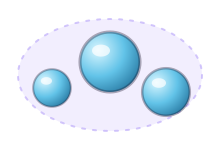 | Ne, He, Kr, Xe | The other noble gases are part of the remainder of dry air. | The other noble gases are present in much smaller shares than argon. |
| Carbon dioxide | 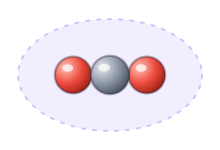 | CO2 | Carbon dioxide is part of the remainder of dry air. | Carbon dioxide is present in a very small share by volume. |

Water vapour is not counted in the composition of dry air, because the amount of water vapour in the air changes from place to place. supports K324-12(a)
Showing that air contains oxygen
2Cu(s) + O2(g) → 2CuO(s)Heating copper in a fixed volume of air removes the oxygen as black copper(II) oxide, so the volume of gas decreases and the gas left behind is mainly nitrogen.
The SEAB glossary says “State implies a concise answer with little or no supporting argument, e.g. a numerical answer that can be obtained ‘by inspection’”, so when asked to state the composition of dry air, give approximately 78% nitrogen and 21% oxygen without extra explanation.
Fractional distillation of air

Never Overlook Air's Components
In decreasing order of volume, dry air contains nitrogen, oxygen, argon and carbon dioxide.Key: N is nitrogen, O is oxygen, A is argon (the main noble gas, so write noble gases, with argon the main one, when asked for the remainder) and C is carbon dioxide.Dry air is approximately 78% nitrogen and 21% oxygen, and the remainder is mainly argon and the other noble gases together with a little carbon dioxide.
Depth: why and how
- Why is the composition given for dry air? The amount of water vapour in air changes from place to place and from day to day, so the composition is quoted for air with the water vapour removed.
- How can you show that oxygen is only part of air? Heating copper in a fixed volume of air removes the oxygen, so the volume of gas decreases, and the gas that is left is mainly nitrogen.
- Why do the noble gases not take part when a fuel burns in air? Noble gases are unreactive, so they stay unchanged.
- Why does carbon dioxide stay a small part of the air even though many processes release it? Plants and other producers remove carbon dioxide by photosynthesis, as the carbon cycle section explains.
- Cross-link to Experimental Chemistry: air is a mixture, so its gases keep their own properties and can be separated by a physical method such as fractional distillation.
Common mistakes
Air is approximately 78% oxygen and 21% nitrogen.
Dry air is approximately 78% nitrogen and 21% oxygen, so nitrogen is the main gas and not oxygen.
Air is a compound of nitrogen and oxygen.
Air is a mixture of gases, so the gases in it are not chemically joined.
The remainder of dry air is mostly carbon dioxide.
The remainder of dry air is mostly noble gases, with argon as the main constituent, and carbon dioxide is a very small part.
Argon is the second most common gas in dry air.
Oxygen is the second most common gas in dry air, and argon, the main noble gas, comes third.
Exam check
Q1Which gas is the main constituent of dry air?
- Aoxygen
- Bargon
- Ccarbon dioxide
- Dnitrogen
Show answer
MCQ answer key D (nitrogen): dry air is approximately 78% nitrogen, which is more than any other gas.
Q2Which noble gas is the main constituent of the remainder of dry air after nitrogen and oxygen?
- Ahelium
- Bneon
- Cxenon
- Dargon
Show answer
MCQ answer key D (argon): K324 names argon as the main constituent of the noble gases in dry air, and the other noble gases are present in much smaller shares.
Q3Which statement about dry air is correct?
- AIt is a mixture of gases.
- BIt is a compound of nitrogen and oxygen.
- CIt contains more oxygen than nitrogen.
- DIt is mostly argon.
Show answer
MCQ answer key A (It is a mixture of gases.): the gases in air are not chemically joined, and nitrogen, at approximately 78%, is the main gas.
StructuredDry air is a mixture of gases.
- State the approximate percentage by volume of nitrogen and of oxygen in dry air. [2]
- Name the main noble gas in dry air. [1]
- Name one gas in dry air that is neither nitrogen, oxygen nor a noble gas. [1]
- Suggest why the composition of air is given for dry air. [2]
Total: 6 marks
Show mark scheme
(a) 2 marks
- Mark scheme: nitrogen is approximately 78%
- Mark scheme: oxygen is approximately 21%
(b) 1 mark
- Mark scheme: argon
(c) 1 mark
- Mark scheme: carbon dioxide
(d) 2 marks
- Mark scheme: the amount of water vapour in air changes
- Mark scheme: so the percentages of the other gases would not be fixed
Common atmospheric pollutants
name some common atmospheric pollutants, e.g. carbon monoxide; methane; nitrogen oxides (NO and NO2); ozone; sulfur dioxide; unburned hydrocarbons
Common atmospheric pollutants include carbon monoxide, methane, nitrogen oxides (NO and NO2), ozone, sulfur dioxide and unburned hydrocarbons.
- Atmospheric pollutant
- Atmospheric pollutant: a substance in the air that harms the health of living things or damages the environment
- Carbon monoxide, CO
- Carbon monoxide, CO: a colourless and odourless poisonous gas
- Methane, CH4
- Methane, CH4: the simplest hydrocarbon, which is a pollutant because it is a greenhouse gas
- Nitrogen oxides, NO and NO2
- Nitrogen oxides, NO and NO2: oxides of nitrogen, named nitrogen monoxide and nitrogen dioxide, which can form acid rain
- Ozone, O3
- Ozone, O3: a form of oxygen with three atoms in each molecule, which is a pollutant when it is near the ground
- Sulfur dioxide, SO2
- Sulfur dioxide, SO2: a colourless gas with a sharp smell that forms acid rain
- Unburned hydrocarbons
- Unburned hydrocarbons: fuel molecules, made of carbon and hydrogen only, that leave an engine or a furnace without being burned
Pollutants, sources, effects and remedies
| Pollutant | Picture | Main source | Harm it does | Remedy |
|---|---|---|---|---|
| Carbon monoxide, CO | 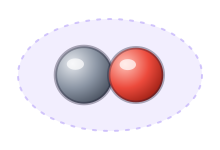 | Carbon monoxide comes from the incomplete combustion of carbon-containing substances. | Carbon monoxide is toxic. | A catalytic converter changes carbon monoxide into carbon dioxide. |
| Methane, CH4 | 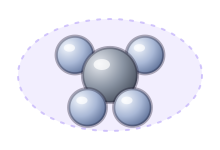 | Methane comes from the decay of organic matter without oxygen and from livestock. | Methane is a greenhouse gas that may contribute to global warming. | Not required for K324 12(d); methane is dealt with as a greenhouse gas in 12(h). |
| Nitrogen oxides, NO and NO2 | 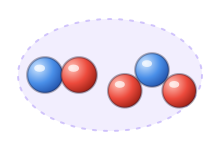 | Nitrogen oxides come from lightning activity and internal combustion engines. | Nitrogen dioxide takes part in the formation of acid rain. | A catalytic converter reduces nitrogen oxides to nitrogen. |
| Ozone, O3 | 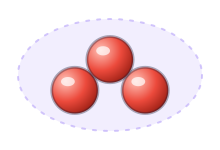 | Ozone near the ground forms from nitrogen oxides and unburned hydrocarbons in sunlight, which is taught in schools but is not a K324 outcome. | Ozone near the ground harms the lungs. | Less ozone forms when fewer nitrogen oxides and unburned hydrocarbons are released. |
| Sulfur dioxide, SO2 | 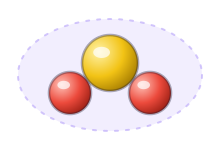 | Sulfur dioxide comes from volcanoes and the combustion of fossil fuels. | Sulfur dioxide takes part in the formation of acid rain and harms breathing. | Calcium carbonate removes sulfur dioxide from flue gas. |
| Unburned hydrocarbons | 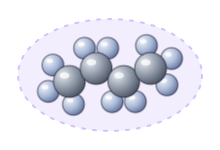 | Unburned hydrocarbons are fuel that leaves an engine without being fully burned. | Unburned hydrocarbons help to form ozone near the ground. | A catalytic converter oxidises unburned hydrocarbons to carbon dioxide and water. |
SEAB writes nitrogen oxides as NO and NO2, so be ready to give either the name or the formula. supports K324-12(b)
The SEAB glossary says “List requires a number of points, generally each of one word, with no elaboration. Where a given number of points is specified, this should not be exceeded”, so if a question asks you to list two pollutants, write exactly two names.
Cat Munches Noodles On Sunny Umbrellas
The six common atmospheric pollutants, in alphabetical order, are carbon monoxide, then methane, then nitrogen oxides, then ozone, then sulfur dioxide and last unburned hydrocarbons.Key: C is carbon monoxide, M is methane, N is nitrogen oxides, O is ozone, S is sulfur dioxide and U is unburned hydrocarbons.Learn the six example pollutants as carbon monoxide, methane, nitrogen oxides, ozone, then sulfur dioxide and unburned hydrocarbons, and link each one to a source, a harm and a remedy.
Depth: why and how
- Why is ozone both a pollutant and a protector? Ozone near the ground is breathed in and harms the lungs, but ozone high in the atmosphere absorbs harmful ultraviolet radiation.
- Why are unburned hydrocarbons classed as pollutants? They take part with nitrogen oxides in the formation of ozone near the ground in sunlight.
- Why is methane named as a pollutant when it is also a fuel? Methane is a greenhouse gas, so it traps heat when it escapes into the air even though it is useful as natural gas.
- Which of the named pollutants are oxides? Carbon monoxide, nitrogen oxides and sulfur dioxide are oxides, but ozone is a form of oxygen and not an oxide.
- Is carbon dioxide one of the pollutants named in K324 outcome 12(b)? No, K324 treats carbon dioxide as a greenhouse gas in outcome 12(h) and not as one of the pollutants in this list.
- Cross-link to Organic Chemistry: a hydrocarbon is a compound made of carbon and hydrogen only, and methane is the simplest hydrocarbon.
Common mistakes
Carbon dioxide is a poisonous pollutant like carbon monoxide.
Carbon monoxide is the pollutant that K324 singles out as toxic, because it reduces the oxygen the blood carries, whereas carbon dioxide is not poisonous in this way and is treated as a greenhouse gas.
Ozone is harmful wherever it is found.
Ozone near the ground is a pollutant, but ozone in the ozone layer protects living things from ultraviolet radiation.
Sulfur dioxide and nitrogen oxides are the same pollutant.
Sulfur dioxide and nitrogen oxides are different pollutants with different formulae and sources, although both take part in acid rain.
Unburned hydrocarbons form when a fuel burns completely.
Unburned hydrocarbons are fuel molecules that escape without burning, and complete combustion forms carbon dioxide and water.
Exam check
Q1Which of these is an atmospheric pollutant?
- Anitrogen
- Bargon
- Coxygen
- Dsulfur dioxide
Show answer
MCQ answer key D (sulfur dioxide): sulfur dioxide is one of the pollutants named in K324, whereas nitrogen, argon and oxygen are normal constituents of dry air.
Q2Which pair of formulae represents the nitrogen oxides named in K324?
- ACO and CO2
- BN2 and O2
- CNO and NO2
- DSO2 and O3
Show answer
MCQ answer key C (NO and NO2): the nitrogen oxides are nitrogen monoxide, NO, and nitrogen dioxide, NO2.
Q3Which gas is a pollutant near the ground but absorbs ultraviolet radiation high in the atmosphere?
- Aozone
- Bmethane
- Ccarbon monoxide
- Dsulfur dioxide
Show answer
MCQ answer key A (ozone): ozone is harmful to the lungs near the ground, but the ozone layer absorbs harmful ultraviolet radiation.
StructuredThe air in a busy city contains several pollutants.
- Give the formulae of the two nitrogen oxides named in the syllabus. [2]
- State what is meant by unburned hydrocarbons. [1]
- Name the gas that is a pollutant near the ground but protects living things in the ozone layer. [1]
- Name two other pollutants from the six that K324 gives as examples. [2]
Total: 6 marks
Show mark scheme
(a) 2 marks
- Mark scheme: NO
- Mark scheme: NO2
(b) 1 mark
- Mark scheme: fuel molecules, made of carbon and hydrogen only, that escape without being burned
(c) 1 mark
- Mark scheme: ozone
(d) 2 marks
- Mark scheme: any two from: carbon monoxide; methane; sulfur dioxide; unburned hydrocarbons (1 mark for each)
- Mark scheme: accept any other correct atmospheric pollutant not already named in the question
You've read the free 26%. Unlock the rest of Chapter 12.
Still to read in this chapter:
- Sources of the pollutants
- Solutions to pollution problems
- Effects of the pollutants
- The ozone layer and CFCs
- The carbon cycle
- Greenhouse gases and global warming
$9 one-time · all 13 chapters · no subscription
Less than a fast-food meal.
Yours for the whole syllabus.
Premium members get all 13 chapters included.
Notes version 1.0 · Last updated 2 Oct 2026 · Chapter 12 of 13