










Chemical Energetics
SEAB syllabus topic 9: how chemical reactions give out or take in heat, how to draw energy profile diagrams, and how bond breaking and bond making explain the energy change, with common mistakes and an exam check for every outcome.

An exothermic reaction gives out heat and has a negative ΔH, and an endothermic reaction takes in heat and has a positive ΔH.
An energy profile diagram shows the reactants, the products, ΔH and the activation energy, and a catalyst lowers only the activation energy.
A reaction is exothermic when more energy is released in making bonds than is absorbed in breaking bonds.
Enthalpy change: exothermic and endothermic reactions
describe the meaning of enthalpy change in terms of exothermic (∆H negative) and endothermic (∆H positive) reactions
The enthalpy change, ΔH, of a reaction is its heat energy change: ΔH is negative for an exothermic reaction, which gives out heat, and ΔH is positive for an endothermic reaction, which takes in heat.
- Enthalpy change, ΔH
- Enthalpy change, ΔH: the heat energy change of a reaction as written in its equation, measured in kJ/mol, with a sign that shows whether heat is given out or taken in
- Exothermic reaction
- Exothermic reaction: a reaction that gives out heat energy to the surroundings, so the temperature of the surroundings rises and ΔH is negative
- Endothermic reaction
- Endothermic reaction: a reaction that takes in heat energy from the surroundings, so the temperature of the surroundings falls and ΔH is positive
- Surroundings
- Surroundings: everything around the reacting particles, such as the water that surrounds them in a solution, the container and the air; heat passes between the particles and these surroundings, and a thermometer in the solution detects it as a change in temperature supports K324-9(a)
- Sign of ΔH
- Sign of ΔH: the sign is negative when energy leaves the chemicals as heat and positive when energy enters the chemicals as heat
Detecting a heat change

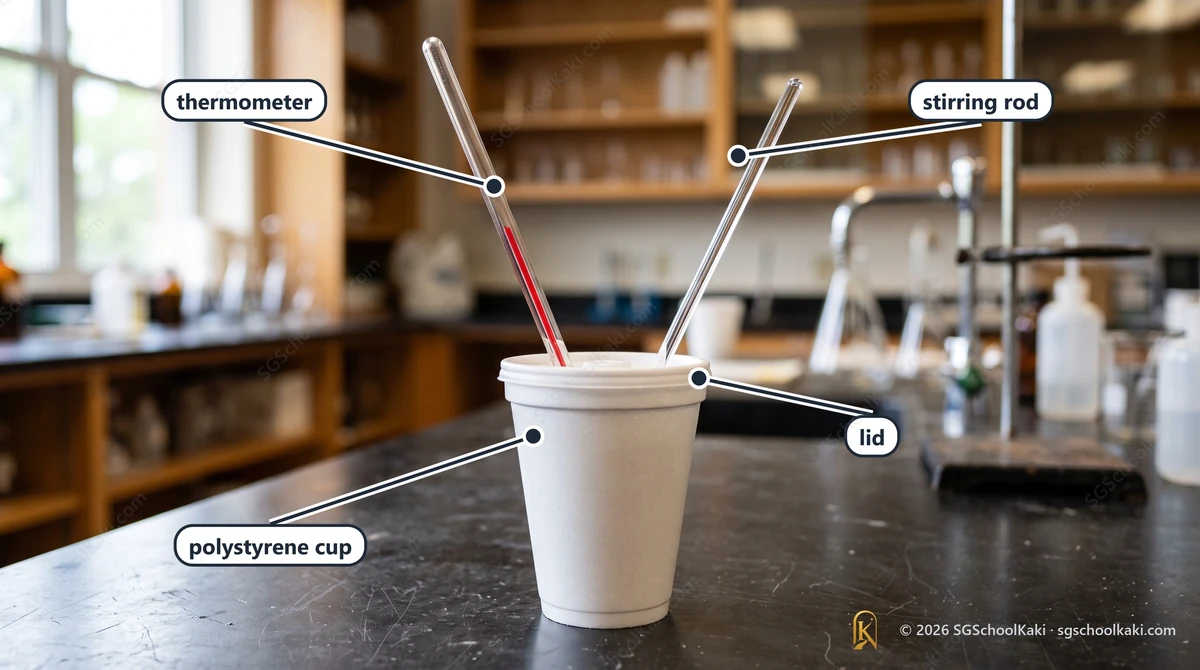
Thermometer reading: when chemicals react in a solution in a polystyrene cup, a fall in the temperature of the solution shows that the reaction is endothermic, and a rise shows that it is exothermic. supports K324-9(a)
- 1Measure the temperature of the reacting solution before the chemicals are mixed.
- 2Mix the chemicals in a polystyrene cup, stir, and record the highest or lowest temperature reached.
- 3If the temperature of the solution rose, the reaction is exothermic and ΔH is negative.
- 4If the temperature of the solution fell, the reaction is endothermic and ΔH is positive.
Exothermic and endothermic examples
| Process | Picture | Type and sign of ΔH |
|---|---|---|
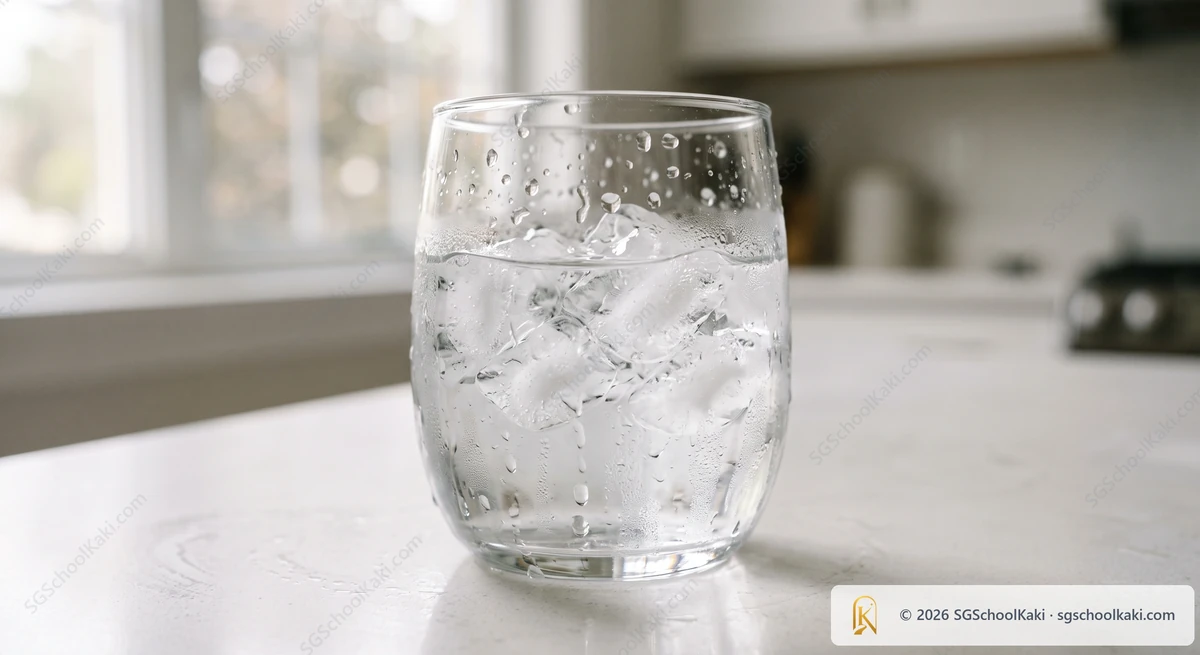
| Condensation | 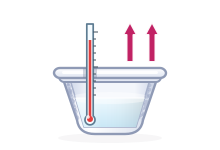 | Condensation is exothermic, so ΔH is negative. |
| Freezing | | Freezing is exothermic, so ΔH is negative. |
| Neutralisation | | Neutralisation of an acid by an alkali is exothermic, so ΔH is negative. |
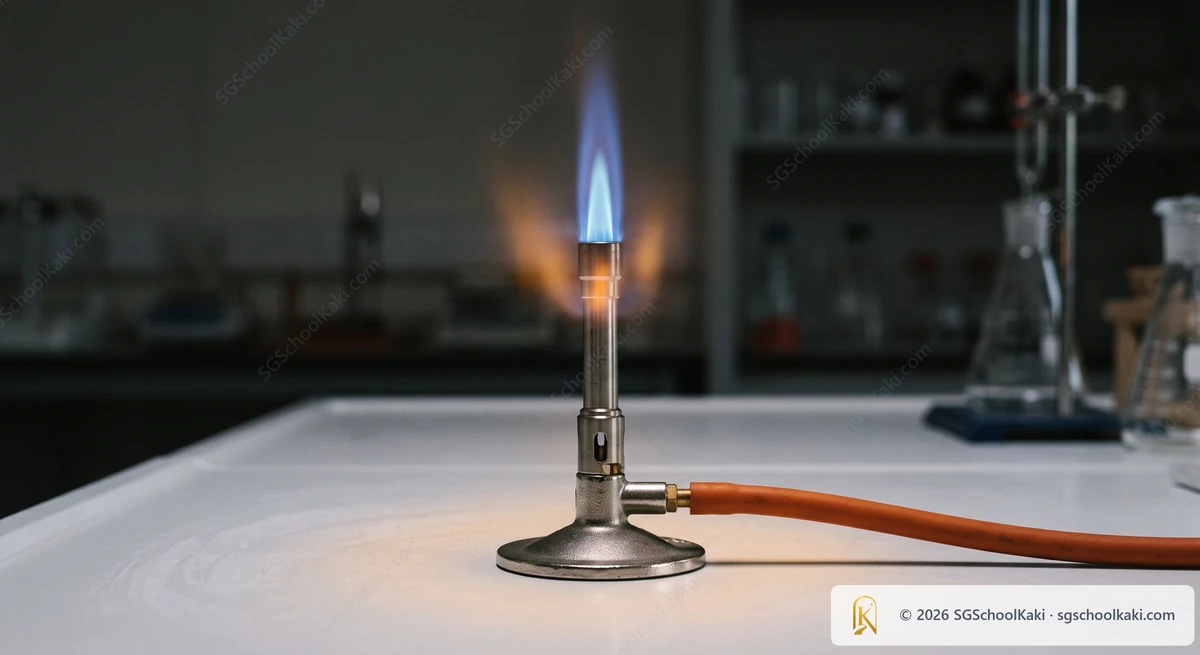
| Combustion | | Combustion of a fuel is exothermic, so ΔH is negative. |
| Respiration | | Respiration is exothermic, so ΔH is negative. |
| Evaporation | 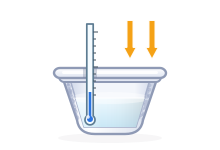 | Evaporation is endothermic, so ΔH is positive. |
| Melting | | Melting is endothermic, so ΔH is positive. |
| Photosynthesis | | Photosynthesis is endothermic, so ΔH is positive. |
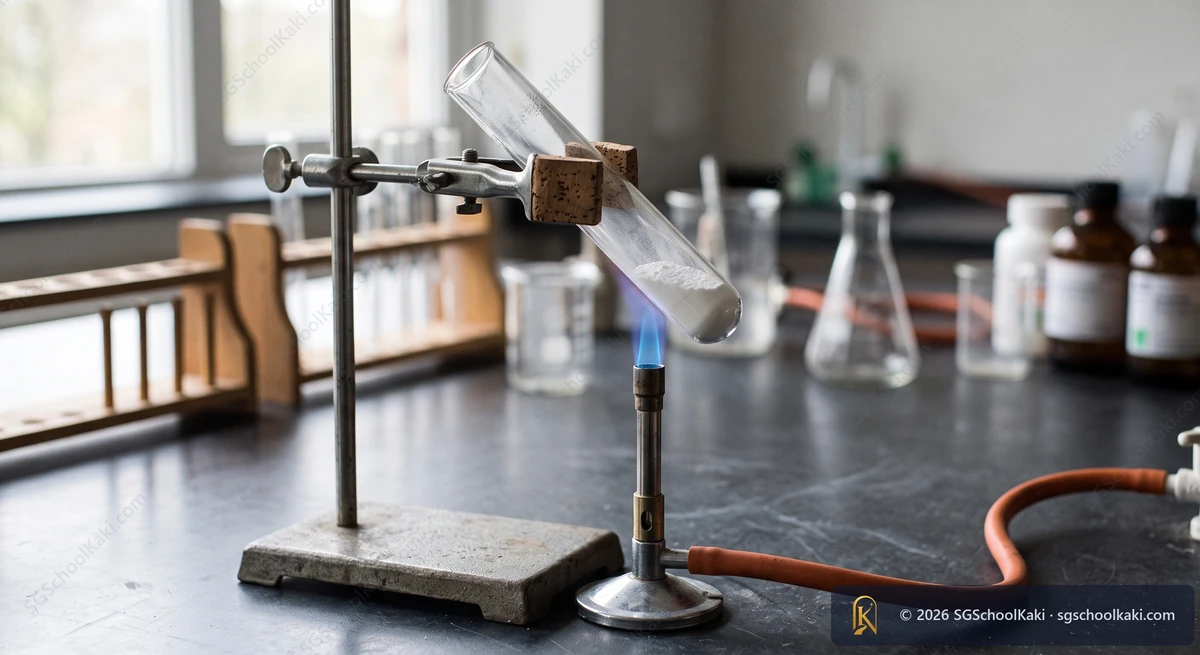
| Thermal decomposition (most examples) | | Most thermal decompositions, such as that of calcium carbonate, are endothermic, so ΔH is positive. |
| Metal + dilute acid | | A reactive metal reacting with a dilute acid is exothermic, so ΔH is negative. |
| Dissolving ammonium nitrate | | Dissolving ammonium nitrate in water is endothermic, so ΔH is positive. |

Equations to recognise
HCl(aq) + NaOH(aq) → NaCl(aq) + H2O(l)Neutralisation of hydrochloric acid by aqueous sodium hydroxide is exothermic.
CH4(g) + 2O2(g) → CO2(g) + 2H2O(l)Burning methane gives out heat, so the reaction is exothermic.
C6H12O6(aq) + 6O2(g) → 6CO2(g) + 6H2O(l)Respiration of glucose is exothermic and releases energy for the cell.
CaCO3(s) → CaO(s) + CO2(g)Heating calcium carbonate is a thermal decomposition, which is endothermic.
6CO2(g) + 6H2O(l) → C6H12O6(aq) + 6O2(g)Photosynthesis takes in energy from sunlight, so it is endothermic.
The SEAB glossary says “Describe requires candidates to state in words (using diagrams where appropriate) the main points of the topic”, so when you describe an exothermic or endothermic reaction, state the direction of heat flow, the change in temperature and the sign of ΔH.
Depth: why and how
- Why does the temperature of the surroundings rise in an exothermic reaction? Heat energy passes from the reacting chemicals to the surroundings, so the surroundings gain energy.
- Why does a polystyrene cup give a better result than a metal can? Polystyrene is a poor conductor of heat, so less heat escapes and the temperature change is easier to detect.
- Why is the sign of ΔH opposite to the change in temperature? ΔH describes the energy of the chemicals, so when the chemicals lose energy the surroundings warm up and ΔH is negative.
- Why are changes of state included among exothermic and endothermic processes? Energy is given out when particles come closer together and taken in when they are pulled apart, so condensing and freezing are exothermic and evaporating and melting are endothermic.
- Which everyday reactions are exothermic? A reactive metal such as magnesium reacting with dilute acid warms the mixture, so ΔH is negative, and so does burning a fuel.
- Which everyday process is endothermic? Dissolving ammonium nitrate in water makes the solution feel cold, because heat is taken in from the water and the surroundings, so ΔH is positive.
- Cross-link to Rate of Reactions: a reaction that is exothermic can still need energy to start, and that starting energy is the activation energy.
Common mistakes
An exothermic reaction takes in heat, so ΔH is positive.
An exothermic reaction gives out heat to the surroundings, so ΔH is negative.
The temperature falls in an exothermic reaction.
The temperature of the surroundings rises in an exothermic reaction and falls in an endothermic reaction.
Melting is exothermic because ice looks as if it is losing heat.
Melting is endothermic because energy is taken in to separate the particles.
A negative ΔH means that the reaction is not important.
A negative ΔH only shows the direction of heat flow: heat is given out.
Exothermic means heat out, temperature up and ΔH negative, whereas endothermic means heat in, temperature down and ΔH positive.
Exam check
Q1Which statement describes an exothermic reaction?
- AHeat energy is taken in from the surroundings and ΔH is negative.
- BHeat energy is given out to the surroundings and ΔH is positive.
- CHeat energy is given out to the surroundings and ΔH is negative.
- DHeat energy is taken in from the surroundings and ΔH is positive.
Show answer
MCQ answer key C (Heat energy is given out to the surroundings and ΔH is negative.): an exothermic reaction gives out heat to the surroundings and has a negative ΔH, whereas an endothermic reaction takes in heat and has a positive ΔH.
Q2Two solutions are mixed in a polystyrene cup and the temperature falls. Which conclusion is correct?
- AThe reaction is endothermic and ΔH is positive.
- BThe reaction is exothermic and ΔH is negative.
- CThe reaction is endothermic and ΔH is negative.
- DThe reaction is exothermic and ΔH is positive.
Show answer
MCQ answer key A (The reaction is endothermic and ΔH is positive.): a fall in temperature shows that heat is taken in from the surroundings, so the reaction is endothermic and ΔH is positive.
Q3Which process is endothermic?
- Athermal decomposition of calcium carbonate
- Bcombustion of methane
- Ccondensation of steam
- Dneutralisation of an acid by an alkali
Show answer
MCQ answer key A (thermal decomposition of calcium carbonate): heating calcium carbonate takes in heat, whereas combustion, condensation and neutralisation give out heat.
StructuredAqueous hydrochloric acid is added to aqueous sodium hydroxide in a polystyrene cup, and the temperature of the mixture rises.
- State whether the reaction is exothermic or endothermic and give a reason. [2]
- State the sign of ΔH for this reaction. [1]
- Write an equation, with state symbols, for the reaction. [2]
- State the change in temperature that a student would see if the reaction were endothermic. [1]
Total: 6 marks
Show mark scheme
(a) 2 marks
- Mark scheme: exothermic
- Mark scheme: the temperature rises, so heat energy is given out to the surroundings
(b) 1 mark
- Mark scheme: negative
(c) 2 marks
- Mark scheme: HCl(aq) + NaOH(aq) → NaCl(aq) + H2O(l)
- Mark scheme: all four state symbols are correct
(d) 1 mark
- Mark scheme: the temperature falls
You've read the free 37%. Unlock the rest of Chapter 9.
Still to read in this chapter:
- Energy profile diagrams
- Bond breaking and bond making
- Explaining enthalpy changes with bonds
$9 one-time · all 13 chapters · no subscription
Less than a fast-food meal.
Yours for the whole syllabus.
Premium members get all 13 chapters included.
Notes version 1.0 · Last updated 2 Oct 2026 · Chapter 9 of 13