






From 2027, more Singapore students will be able to study their Mother Tongue Language and literature at an advanced level. Education Minister Desmond Lee announced three changes at the 14th Mother Tongue Languages Symposium on Saturday, 1 August 2026: the Tamil elective goes centre-based at the Umar Pulavar Tamil Language Centre, the Chinese elective at JC level adds a sixth school, and the Malay (Special Programme) adds a fifth centre.
The Tamil change is the one that actually changes who can apply. The other two add capacity in one more school each. Below: what changed, the full list of every school and centre that runs these programmes today, and the exact grades your child needs at Secondary 2 and at O-Level.
Source: MOE's announcement at the 14th Mother Tongue Languages Symposium, 1 August 2026, as reported by Channel NewsAsia; current programme lists from MOE's own programme pages.
What MOE Announced, In Three Cards
Tamil elective goes centre-based at UPTLC
MOE will broaden access to the Tamil Language Elective Programme at both secondary and JC level through a centre-based approach at the Umar Pulavar Tamil Language Centre. This is in addition to the two JCs and three secondary schools that offer it today.
Who it helps
Students in schools that do not run TLEP — previously the programme was out of reach unless you were in one of five schools.
A sixth JC joins the Chinese elective
The Chinese Language Elective Programme at junior college level expands to a sixth school: Anderson Serangoon Junior College.
Who it helps
JC-bound students in the north-east who want H2 Chinese Language and Literature closer to home.
A fifth Malay (Special Programme) centre
National Junior College becomes the fifth centre for the Malay (Special Programme), which lets students whose Mother Tongue is not Malay learn it as a third language.
Who it helps
Chinese- and Tamil-stream students who want Malay as a third language, and a window into the Malay community here and in the region.
We want to create pathways for students who want to learn mother tongues more deeply.
The elective programmes are designed for linguistically talented students with a strong interest in Chinese, Malay or Tamil. At secondary level they build a foundation in the language and cultural appreciation through the study of Mother Tongue literature. At JC level they push deeper into language and literature through cultural activities.
Why the Tamil Change Is the Big One
School-based vs centre-based, in plain English
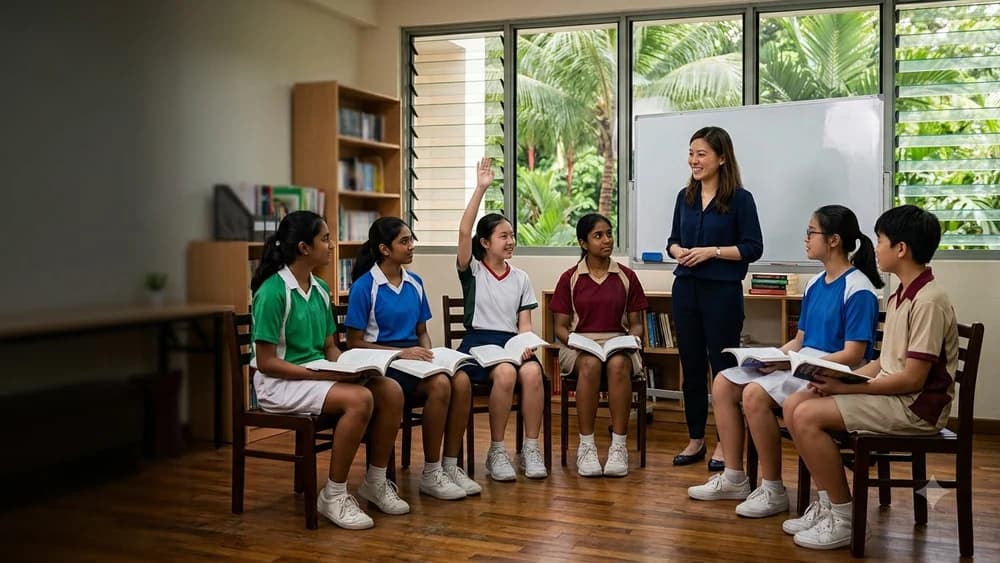
Right now the Tamil Language Elective Programme is school-based. Your child can only take it if they are enrolled in one of five schools: Commonwealth, Riverside or Yishun Town Secondary at O-Level stage, or Anderson Serangoon JC or National JC at A-Level stage. If your child is strong in Tamil but posted elsewhere, that was the end of it.
From 2027 the same programme also runs centre-based at the Umar Pulavar Tamil Language Centre, at both secondary and JC level. Students from schools that do not offer TLEP can take part — and, MOE says, it gives those students a clearer pathway from secondary school into junior college.
That pathway point matters. Tamil is the smallest of the three Mother Tongue cohorts, so a school-based model spreads a small number of eligible students across a small number of schools. A central class pools them.
Until 2026 — school-based only
- • 3 secondary schools run TLEP-Sec
- • 2 junior colleges run TLEP-JC
- • Not in one of them? No access, however strong your Tamil
From 2027 — centre-based route added
- Lessons run centrally at Umar Pulavar Tamil Language Centre
- Open to students whose own school does not offer TLEP
- Clearer secondary → JC pathway, at both levels
The timing is not a coincidence
UPTLC is itself moving in January 2027 — from 2 Beatty Road to the former Stamford Primary School site at 1 Victoria Lane, with larger classrooms, a sheltered court and upgraded facilities. MOE has said the Thiruvalluvar statue moves with it. The centre already runs the National Elective Tamil Language Programme plus Tamil enrichment for students from preschool to JC, so a bigger campus and a bigger teaching role land in the same year.
Every School and Centre That Runs These Programmes
Six programmes, three languages, two levels. Each card below is MOE's own published list, with the 2027 additions flagged. Click a school to see its full profile — cut-off points, CCAs and admission routes.
- Anglican High School
- Chung Cheng High School (Main)
- Dunman High School
- Hwa Chong Institution
- Maris Stella High School
- Nanyang Girls' High School
- Nan Chiau High School
- Nan Hua High School
- Temasek Junior College
- Entry bar
- A2 in Chinese Language or B3 in Higher Chinese at Secondary 2
- What they must offer
- Full or elective Literature in Chinese at O-Level
Nine centres, listed exactly as MOE publishes them — Temasek Junior College appears on MOE’s secondary-level list.
- Dunman High School (Junior College)
- Hwa Chong Institution (Junior College)
- Jurong Pioneer Junior College
- Nanyang Junior College
- Temasek Junior College
- Anderson Serangoon Junior CollegeNew 2027
- Entry bar
- B3 in Higher Chinese, or B4 in Higher Chinese with B3 in Literature in Chinese, or A2 in Chinese
- What they must offer
- H2 Chinese Language and Literature at A-Level (H3 optional)
Five JCs today; Anderson Serangoon Junior College becomes the sixth from 2027.
- Entry bar
- A2 in Malay Language or B3 in Higher Malay at Secondary 2
- What they must offer
- Literature in Malay at O-Level
Unchanged by the 1 August 2026 announcement.
- Jurong Pioneer Junior College
- National Junior College
- Raffles Institution
- Tampines Meridian Junior College
- Yishun Innova Junior College
- Entry bar
- B3 in Higher Malay, or B4 in Higher Malay with B3 in Literature in Malay, or A2 in Malay
- What they must offer
- H2 Malay Language and Literature at A-Level (H3 optional)
Unchanged by the 1 August 2026 announcement.
- Commonwealth Secondary School
- Riverside Secondary School
- Yishun Town Secondary School
- Umar Pulavar Tamil Language Centre (centre-based)New 2027
- Entry bar
- A2 in Tamil Language or B3 in Higher Tamil at Secondary 2
- What they must offer
- Full or elective Literature in Tamil at O-Level
Three school-based centres today; from 2027 a centre-based route at UPTLC opens the programme to students whose own school does not offer it.
- Anderson Serangoon Junior College
- National Junior College
- Umar Pulavar Tamil Language Centre (centre-based)New 2027
- Entry bar
- B3 in Higher Tamil, or B4 in Higher Tamil with B3 in Literature in Tamil, or A2 in Tamil
- What they must offer
- H2 Tamil Language and Literature at A-Level (H3 optional)
Two JCs today; from 2027 the centre-based route at UPTLC gives students a clearer secondary-to-JC pathway.
The same thing as one table
| Programme | Level | Centres | Entry bar | Must offer |
|---|---|---|---|---|
| CLEP-SecChinese | Secondary | 9 today | A2 in Chinese Language or B3 in Higher Chinese at Secondary 2 | Full or elective Literature in Chinese at O-Level |
| CLEP-JCChinese | Junior College | 5 today+1 from 2027 | B3 in Higher Chinese, or B4 in Higher Chinese with B3 in Literature in Chinese, or A2 in Chinese | H2 Chinese Language and Literature at A-Level (H3 optional) |
| MLEP-SecMalay | Secondary | 3 today | A2 in Malay Language or B3 in Higher Malay at Secondary 2 | Literature in Malay at O-Level |
| MLEP-JCMalay | Junior College | 5 today | B3 in Higher Malay, or B4 in Higher Malay with B3 in Literature in Malay, or A2 in Malay | H2 Malay Language and Literature at A-Level (H3 optional) |
| TLEP-SecTamil | Secondary | 3 today+1 from 2027 | A2 in Tamil Language or B3 in Higher Tamil at Secondary 2 | Full or elective Literature in Tamil at O-Level |
| TLEP-JCTamil | Junior College | 2 today+1 from 2027 | B3 in Higher Tamil, or B4 in Higher Tamil with B3 in Literature in Tamil, or A2 in Tamil | H2 Tamil Language and Literature at A-Level (H3 optional) |
The Malay (Special Programme) Works the Other Way Round
A third language, not an elective programme
Everything above is for students studying their own Mother Tongue Language at a deeper level. The Malay (Special Programme) is the opposite direction: it lets students whose Mother Tongue is not Malay learn Malay as a third language, and build an understanding of the Malay community in Singapore and the region.
From 2027, National Junior Collegebecomes the programme's fifth centre, so more students can take up Malay as a third language. If you are weighing third languages, this is the one that comes with a regional-culture component built in.
MOE does not publish the four current Malay (Special Programme) centres in one place, so we are not listing them here. Ask your child's school, or check the MOE Language Centre site.
— what we could not verify
When Each Decision Actually Happens
Parents usually hear about elective programmes at the wrong time — after Secondary 2 results, when the entry bar has already been decided. Here is the real sequence.
End of P6
PSLE Mother Tongue result
Since 2026, a strong Mother Tongue result at PSLE qualifies a student for Higher Mother Tongue from Secondary 1 regardless of their overall PSLE score. MOE said this opens the option to around 2,500 more students.
Secondary 1–2
Take Higher Mother Tongue seriously
The elective programmes select on Secondary 2 results — at least A2 in the Mother Tongue Language, or B3 in Higher Mother Tongue. This is the year the door opens or closes.
Secondary 3
Elective programme starts
CLEP-Sec, MLEP-Sec and TLEP-Sec run over Secondary 3 and 4. Students must offer Literature in that language at O-Level. From 2027, Tamil students can do this at UPTLC even if their own school does not run TLEP.
O-Level results
JC-level entry
B3 in Higher Mother Tongue, or B4 in Higher plus B3 in Literature, or A2 in the language. Entry is via the Joint Admissions Exercise or DSA-JC, and JAE entrants get 2 bonus points for admission to that school.
JC 1–2
H2 Language and Literature
All JC elective students take H2 Language and Literature in that language, with H3 available as a non-examinable option. Scholarships (CLES, MLES, TLES) are open to Singapore Citizens on these programmes.
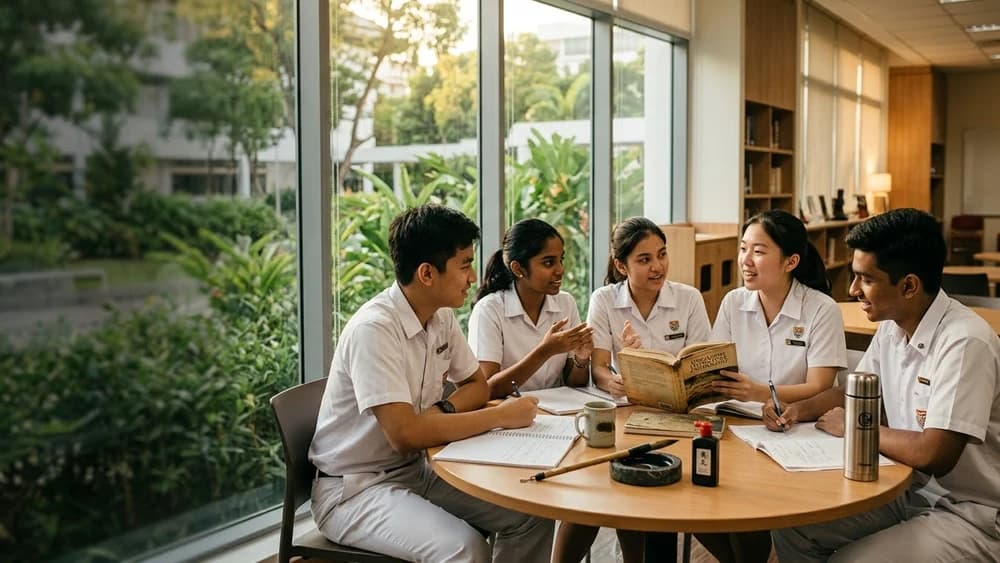
One quiet detail worth knowing: Anderson Serangoon JC already runs the Tamil elective programme. From 2027 it will run the Chinese one too — a single north-east JC offering advanced language and literature in two Mother Tongues.
And At The Other End: The Preschool Pilot
Minister Lee also flagged what is happening well before Secondary 1. MOE has been piloting more Mother Tongue Language exposure at six MOE Kindergartens, raising it from one hour to 1.5 hours each day. In his words, “early results are encouraging” and MOE is “studying the pilot further to assess whether it should be scaled up.”
Read that as a pilot under review, not a confirmed change. Nothing about MK admissions or the national preschool curriculum has changed because of it.
What This Means For Your Family
If your child is strong in Tamil
School choice stops being the deciding factor from 2027. Keep the Secondary 2 grades in range (A2 Tamil or B3 Higher Tamil), and ask the school about the UPTLC centre-based route when details are released. If your child is already in one of the three TLEP secondary schools, nothing you have planned changes.
If your child wants H2 Chinese Language and Literature
There is now a sixth JC on the list. That is one more geographic option in the north-east, not a lower bar — the O-Level entry requirement is the same at every CLEP-JC school, and JAE entrants still get the same 2 bonus points.
If you are deciding about a third language
A fifth Malay (Special Programme) centre means a bit more room. Third languages are a real workload on top of a full subject combination, so treat the extra capacity as an option, not a reason.
Anderson Serangoon JC Profile
The JC gaining the Chinese elective in 2027 — cut-off points, CCAs and subject offerings.
National Junior College Profile
Tamil and Malay elective programmes today, and the fifth Malay (Special Programme) centre from 2027.
Browse All Secondary Schools
Every secondary school in Singapore by area, PSLE score range, CCAs and programmes.
2028 JC Admission: L1R4 Changes
How JC admission scoring changes — and where Mother Tongue sits in the new calculation.
Best Secondary Schools 2026
Every school is a good school — how to find the right fit by location and programme.
DSA Programme Database
1,376 Direct School Admission programmes, including language and humanities talent areas.
Frequently Asked Questions
What exactly did MOE announce on 1 August 2026?
Speaking at the 14th Mother Tongue Languages Symposium, Education Minister Desmond Lee said MOE will expand its Mother Tongue Language Elective Programmes from 2027. Three specific changes: the Tamil Language Elective Programme becomes available through a centre-based approach at the Umar Pulavar Tamil Language Centre at both secondary and JC level; the Chinese Language Elective Programme at JC level expands to a sixth school, Anderson Serangoon Junior College; and National Junior College becomes the fifth centre for the Malay (Special Programme).
What does "centre-based" mean for the Tamil elective programme?
Today, TLEP is school-based: you can only take it if you are enrolled in one of the three secondary schools (Commonwealth, Riverside, Yishun Town) or two junior colleges (Anderson Serangoon, National) that run it. From 2027, lessons will also be run centrally at the Umar Pulavar Tamil Language Centre, so students from schools that do not offer the programme can take part. It is the same model already used for third languages at the MOE Language Centres.
Does my child have to change schools to join?
For the Tamil elective from 2027, no — that is the point of the centre-based route. For CLEP, MLEP and the Malay (Special Programme), the programme is tied to the schools and centres that offer it, so admission generally means being posted to, or admitted by, one of those schools. Check with your child’s school before making any plan around it.
What grades does my child need to qualify?
For the secondary-level elective programmes, the bar is set at Secondary 2 results: at least A2 in the Mother Tongue Language, or B3 in the Higher Mother Tongue. For the JC-level programmes, it is O-Level: B3 in the Higher Mother Tongue, or B4 in Higher plus B3 in Literature in that language, or A2 in the Mother Tongue Language. Students admitted through the Joint Admissions Exercise to a JC elective programme receive 2 bonus points for admission to that school.
What do students commit to if they join?
At secondary level, elective-programme students must offer Literature in their Mother Tongue Language at O-Level. At JC level, all students take H2 Language and Literature in that language at A-Level, with an option to attend H3 as a non-examinable subject. It is a real academic commitment, not an enrichment club.
Is this the same thing as Higher Mother Tongue?
No. Higher Mother Tongue is a subject taken in secondary school; the elective programmes are two-year language-and-literature programmes at selected schools or centres, with their own entry bar and their own literature requirement. They are related though: from 2026, students who did well in Mother Tongue at PSLE can take Higher Mother Tongue from Secondary 1 regardless of their overall PSLE score, which MOE said gives around 2,500 more students that option each year — and a Higher Mother Tongue grade is the most common way into an elective programme later.
What is the Malay (Special Programme)?
It is a third-language programme for students whose Mother Tongue Language is not Malay. They learn Malay alongside their own Mother Tongue, and study the Malay community in Singapore and the region. From 2027, National Junior College becomes its fifth centre.
What is changing at preschool level?
Nothing is confirmed. Minister Lee said MOE has been piloting more Mother Tongue Language exposure at six MOE Kindergartens, raising it from one hour to 1.5 hours each day, and that early results are encouraging. MOE is studying the pilot further to assess whether it should be scaled up. Treat it as a pilot under review, not a change to plan around.
A sixth junior college for the Chinese elective
Announced 1 August 2026, effective 2027
Anderson Serangoon Junior College joins the Chinese Language Elective Programme, taking it from five JCs to six. from five JCs to six
For CLEP-JC the O-Level gate is unchanged: B3 in Higher Chinese, or B4 in Higher Chinese with B3 in Literature in Chinese, or A2 in Chinese. Get in and you take H2 Chinese Language and Literature for two years, H3 optional.
A sixth school is one more geographic option in the north-east, not an easier route — the entry bar and the 2 JAE bonus points are the same at every CLEP-JC school. The same announcement also adds a centre-based Tamil route and a fifth Malay (Special Programme) centre.
Sources
- Channel NewsAsia, 1 Aug 2026 — MOE expands Mother Tongue Language Elective Programme from 2027 — the source for all three 2027 changes, the Minister's quote, and the MOE Kindergarten pilot.
- Ministry of Education — programme pages for CLEP-Sec, CLEP-JC, MLEP-Sec, MLEP-JC, TLEP-Sec and TLEP-JC — current school lists, entry requirements, literature and H2 commitments, and the 2 JAE bonus points.
- MOE press release, 23 Aug 2025 — Relocation of Umar Pulavar Tamil Language Centre — the January 2027 move to 1 Victoria Lane, the facilities, and the centre's existing role.
- MOE Committee of Supply debate 2026, response by Minister for Education Desmond Lee — the Higher Mother Tongue eligibility change and the “around 2,500 more students” figure.
Every figure and school name in this article comes from the sources above. Where MOE has not published something — such as the current four Malay (Special Programme) centres, or how students will apply for the centre-based Tamil route — we say so rather than guess. Implementation details for 2027 have not been released yet; we will update this page when they are.